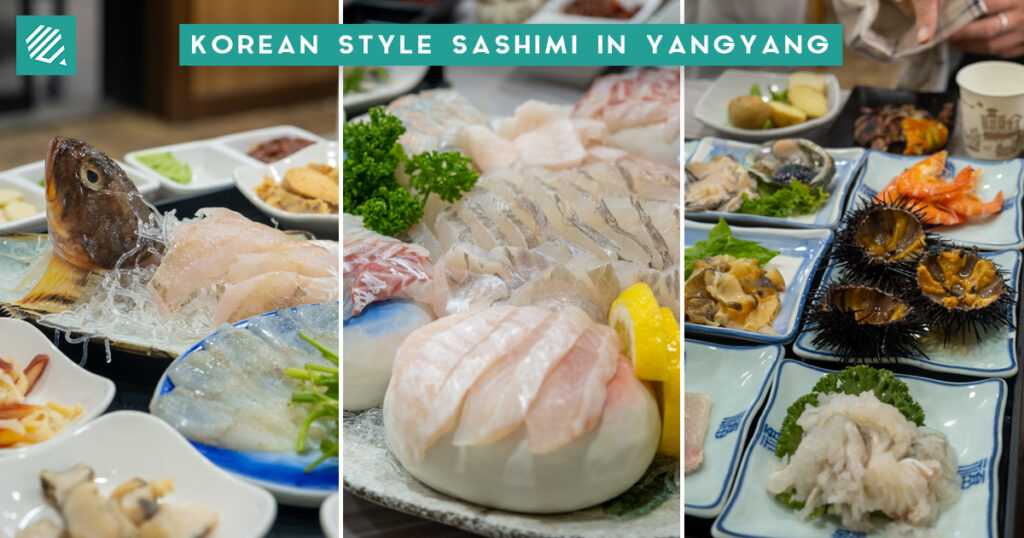
Located in the coastal city of Yangyang, Gangwon-do, Sampal Hwae Jib (삼팔횟집) is a seafood restaurant specialising in hwae (회), Korea’s version of sashimi. Known for its generous multi-course seafood meals and fresh local fish, it is a popular dining spot for visitors exploring Gangwon-do‘s east coast.
What Is Hwae (회)?
Most travellers are familiar with Japanese sashimi, but hwae (회) offers a distinctly Korean experience.
Hwae refers to raw fish that is typically served alongside a variety of side dishes, dipping sauces and fresh vegetables.
Unlike Japanese sashimi, which often focuses on highlighting the fish itself, Korean hwae is commonly enjoyed wrapped in perilla leaves and dipped in chojang, a sweet and spicy vinegar-based sauce.
Common fish used for hwae include:
- Flatfish (광어)
- Rockfish (우럭)
- Sea bream (도미)
If you’re planning a food-focused trip to Korea, trying hwae is one of the most authentic Korean seafood experiences.
Where Is Sampal Hwae Jib Located?
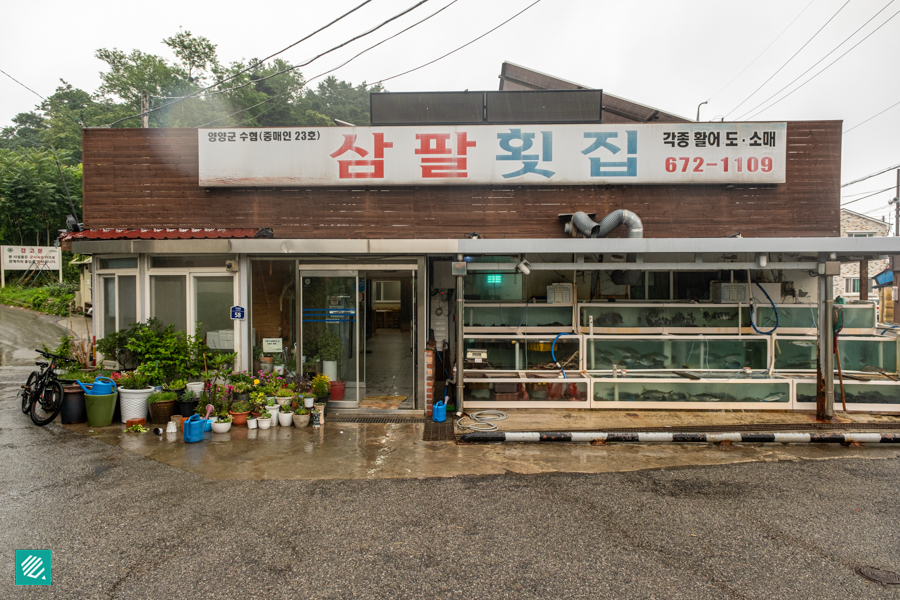
Sampal Hwae Jib is located beside Gisamun Beach in Yangyang, a coastal destination in Gangwon-do known for its surfing beaches, ocean views and fresh seafood.
As you approach the restaurant, you’ll notice rows of fish tanks displaying the day’s catch.
Despite its modest exterior, the restaurant is surprisingly spacious with multiple dining rooms suitable for both small groups and larger gatherings.
Sampal Hwae Jib Menu
The menu is entirely in Korean, though translation apps like Papago make ordering relatively straightforward.
The restaurant keeps its menu focused, with hwae being the main attraction.
Assorted Hwae (모듬회)
The signature item is the Assorted Hwae (모듬회), featuring three to four types of locally sourced fish.
Available sizes include:
- Small: 90,000 won
- Medium: 120,000 won
- Large: 140,000 won
Depending on the size ordered, portions can comfortably feed anywhere from two to eight people.
While hwae can be expensive, the pricing reflects both the freshness of the seafood and the substantial serving sizes.
Set Menus
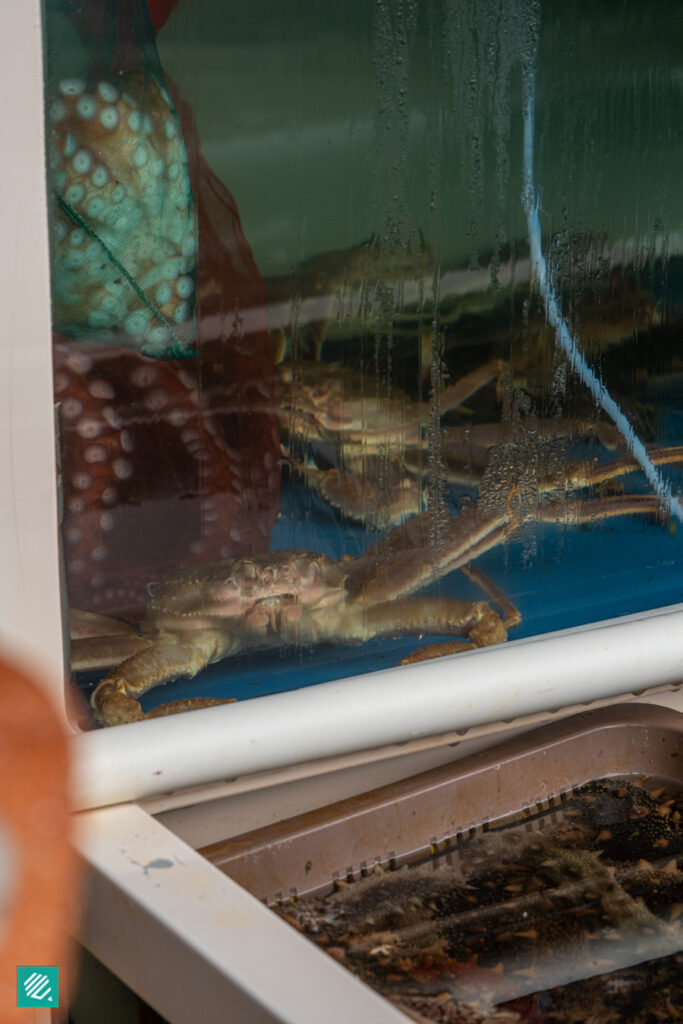
Visitors can also choose from set menus starting from 90,000 won.
These typically include:
- Assorted hwae
- Snow crab
- Mulhoe (물회), a refreshing cold seafood soup popular during Korea’s summer months.
- Maeuntang (매운탕), a spicy fish stew traditionally prepared using the remaining fish bones after the hwae course.
What We Tried
We ordered the Medium Assorted Hwae (120,000 won), which comfortably fed three people.
Like many Korean seafood restaurants, the meal arrives in multiple courses rather than all at once.
First Course: Banchan And Side Dishes
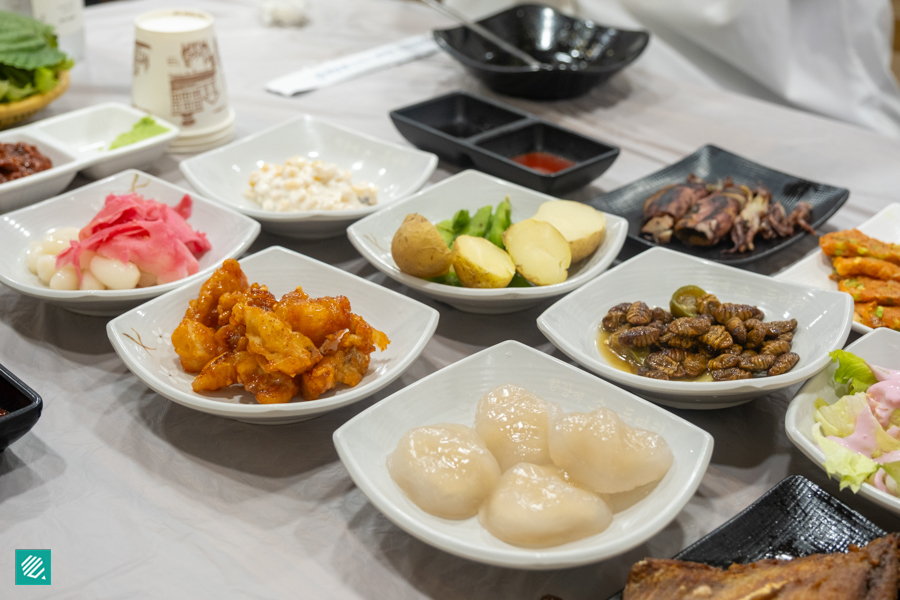
Our meal began with a selection of Korean side dishes that varied based on the day’s ingredients.
It was an impressive amount of food, with more than 10 bites of banchan and more. These dishes were simple and served as appetisers before the main seafood arrived.
Some highlights included:
- Seaweed soup
- Fried fish nuggets
- Sweet scallops
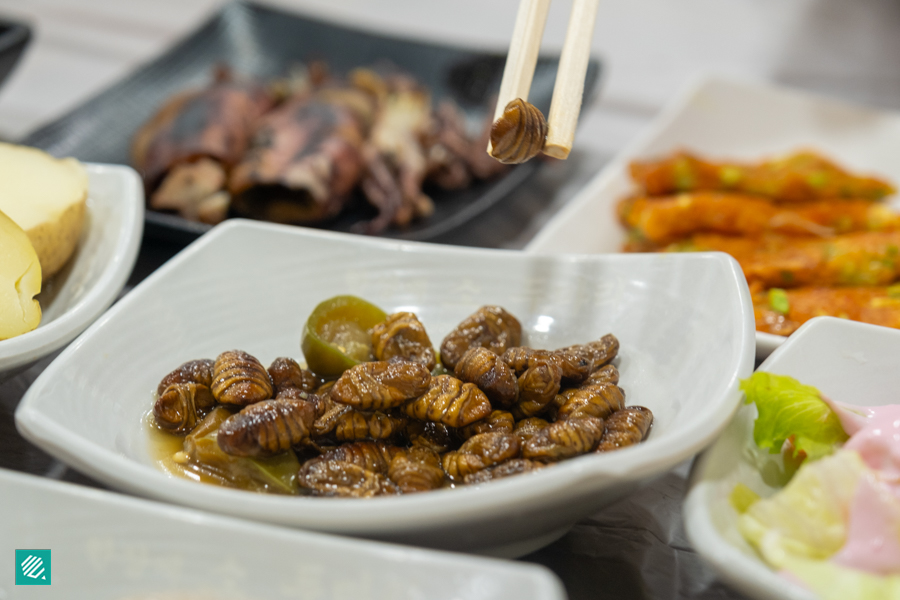
One uniquely Korean item was beondegi (번데기), or silkworm pupae. Known for its strong aroma, it’s a polarising snack among both locals and visitors.
Second Course: Assorted Seafood
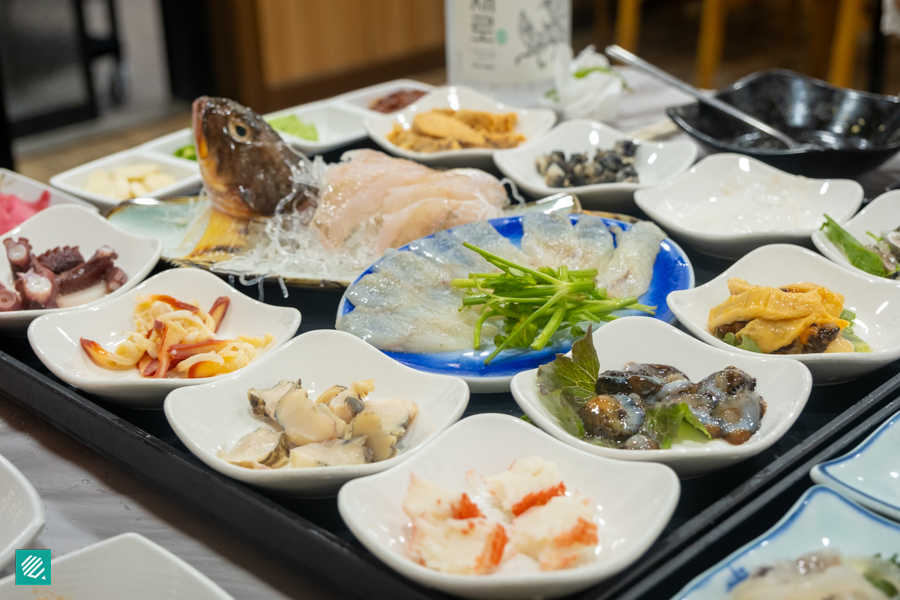
The next round featured more than ten different seafood dishes spread across our tables.
The selection included:
- Abalone
- Conch
- Fresh prawns
- Sea urchin
- Various raw fish
- Small sushi portions
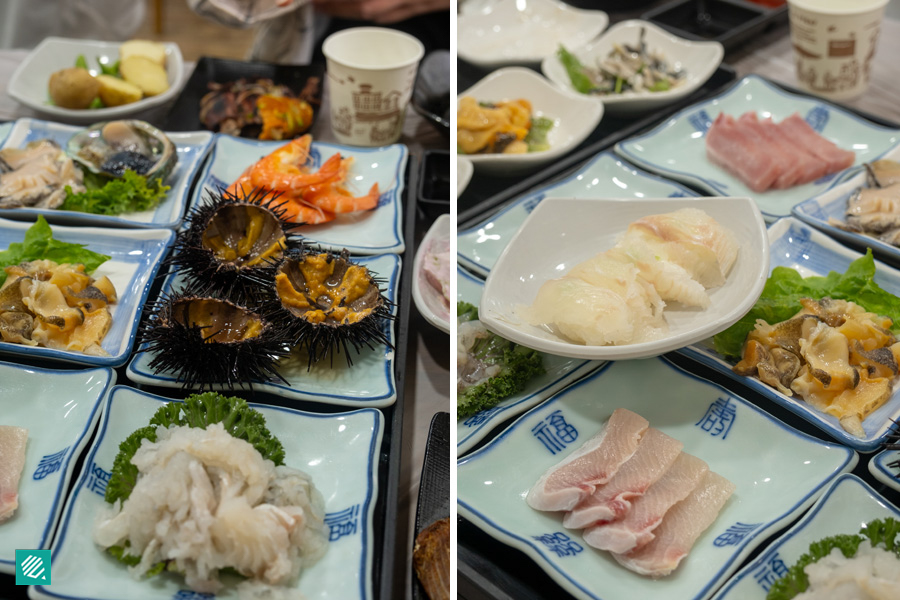
We were also surprised by the types of fish we found, including sea urchin and sliced abalone. While we couldn’t identify every species served, everything tasted exceptionally fresh with no noticeable fishiness.
Main Course: The Hwae
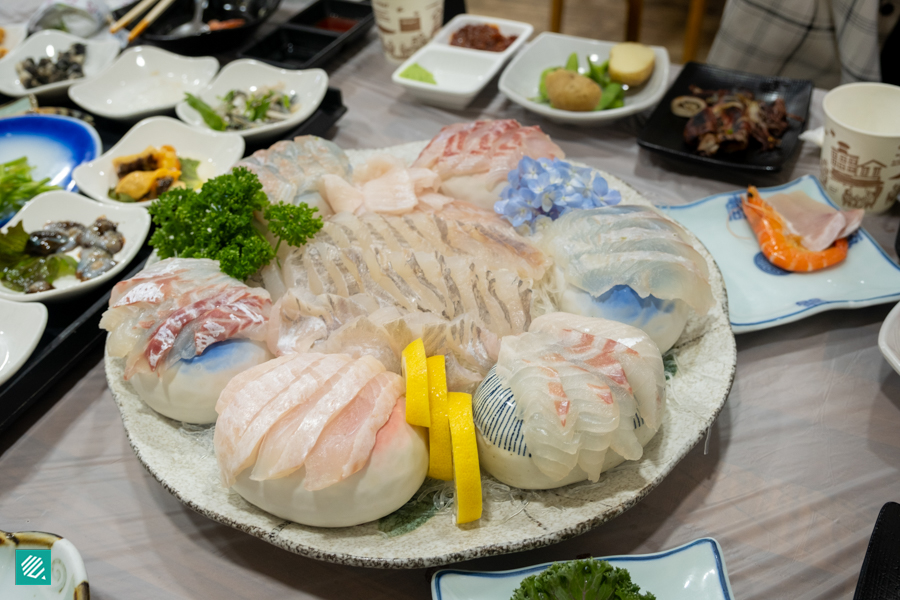
The highlight of the meal was the beautifully plated hwae.
Our platter featured:
- Flounder (광어)
- Sea bream (도미)
- Sea bass (농어)
Compared to Japanese sashimi, the fish had a firmer texture and milder flavour profile. Rather than richness, the focus was on freshness, texture and subtle sweetness.
Of the three fish, our favourite was the flounder!
A traditional Korean way to enjoy hwae is to:
- Place the fish on a perilla leaf.
- Add a small amount of chojang.
- Wrap and eat in one bite.
The combination of fresh fish, spicy sauce and perilla is distinctly Korean, especially with the clean and sweet fish.
Final Course: Maeuntang
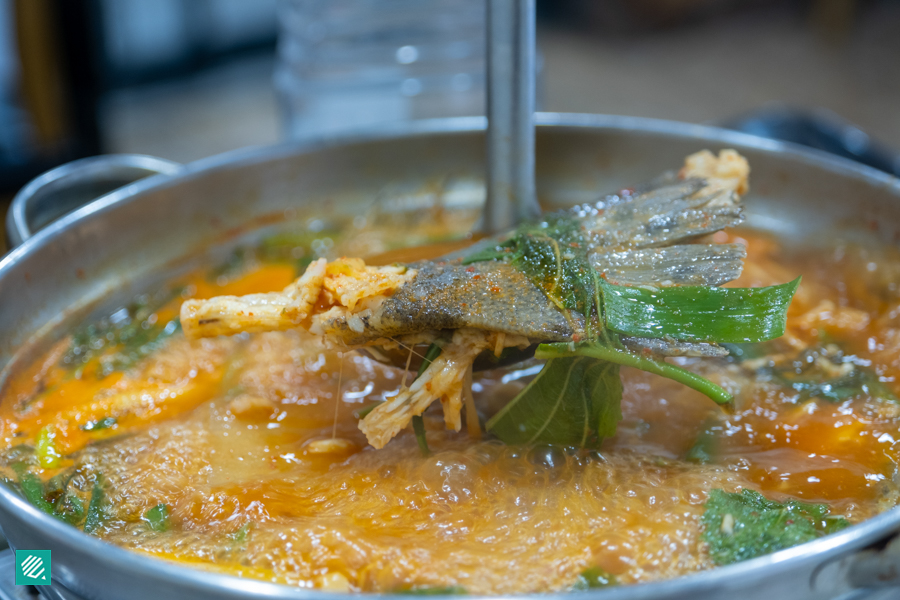
The meal concluded with a steaming bowl of maeuntang.
Made using the remaining fish bones, this spicy fish stew was rich, savoury and comforting. After several courses of cold seafood, it provided a satisfying finish to the meal.
Is Sampal Hwae Jib Worth Visiting?
If you’re looking for authentic Korean seafood in Yangyang, Sampal Hwae Jib is worth considering.
The restaurant offers fresh, locally sourced fish, incredibly generous portions and an authentic, unpretentious eating experience.
Yangyang is a popular summer destination for a reason, with its surf-friendly beaches and seafood! Shortlist the city for your trip to Korea and check out our detailed guide on what to do in Yangyang.
Frequently Asked Questions About Yangyang, Gangwon-do
What is hwae in Korea?
Hwae (회) is Korea's version of raw fish. Hwae is typically eaten with chojang, vegetables and perilla leaves.
Is hwae the same as sashimi?
No. Both dishes use raw fish, but Korean hwae is usually served with dipping sauces, wraps and side dishes, while Japanese sashimi focuses more on the natural flavour of the fish.
What is Yangyang known for?
Yangyang is a city famous for its surf-friendly beaches, seafood and laid-back ambience, making it a popular summer destination for locals and Koreans.
Is Yangyang worth visiting?
Yes. Yangyang is one of Gangwon-do's most popular destinations, offering beaches, surfing spots, seafood restaurants and scenic coastal views.
When is the best time to visit Yangyang?
Summer is the most popular season thanks to beach activities and surfing. However, spring and autumn also offer pleasant weather and fewer crowds.
What should first-time visitors eat in Gangwon-do?
First-time visitors should try hwae, mulhoe, dakgalbi, makguksu, snow crab and fresh seafood caught along the east coast
Is Yangyang a good destination for a Korea holiday?
Yes. Yangyang offers a different side of Korea compared to Seoul, with beaches, surfing, seafood and a more relaxed coastal atmosphere, making it a popular addition to a Korea holiday itinerary.
Sampal Hwae Jib (삼팔횟집)
강원 양양군 현북면 기사문길 56
56, Gisamun-gil, Hyeonbuk-myeon, Yangyang-gun, Gangwon-do, South Korea
Naver Maps | Kakao Maps
*This was an independent review by MiddleClass
*Follow MiddleClass.sg on Facebook, Instagram, TikTok, and Telegram for more food, travel, and trending stories