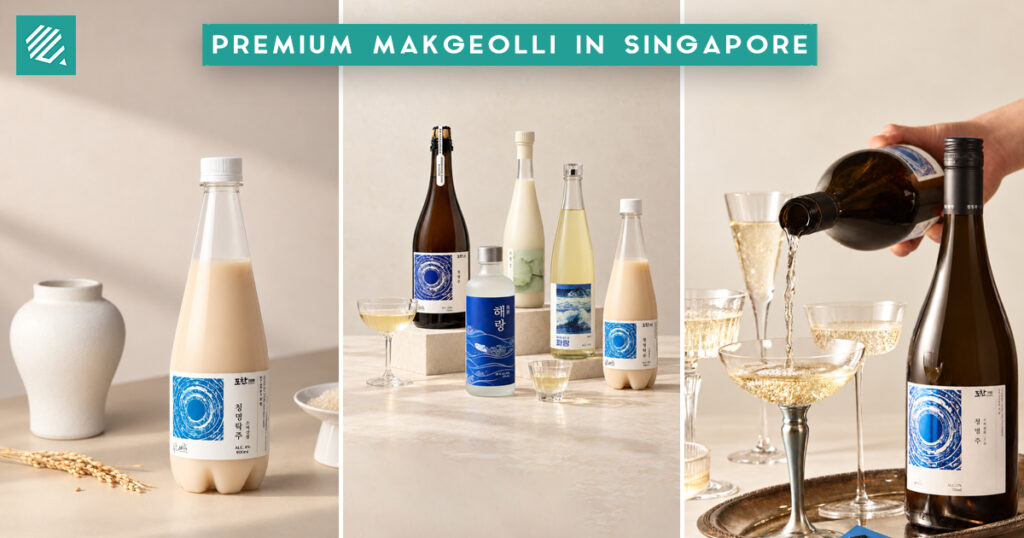
Five premium Korean sool (술, alcohol) labels, picked by Seoul fine-dining restaurants Jungsik and Eatanic Garden, are now on the shelves at Culina at COMO Dempsey.
The collection spans sparkling takju, clear yakju and a distilled soju, showcasing the craftsmanship behind these traditional Korean alcohols.
Korean Sool At Culina Dempsey
These curated Korean sool were first poured during the Formula 1 Singapore Grand Prix by Jungsik and Eatanic Garden, two of Seoul’s fine-dining restaurants.
Jungsik holds two Michelin stars in the 2026 MICHELIN Guide Seoul & Busan, while Eatanic Garden at Josun Palace holds one – making these Korean drinks some of the most premium options around.
From this week, Culina at COMO Dempsey is the place in Singapore to buy them!
What Are Korean Rice Wines?

Korean rice wines are a category of traditional Korean alcoholic beverages made by fermenting rice and water with nuruk, a traditional starter cake (usually wheat-based) that carries wild yeasts and molds. It isn’t filtered, so it comes out milky white, lightly sweet, a little tangy and often slightly fizzy.
A popular Korean rice wine is makgeolli, often served chilled in drinking bowls with pancakes (jeon). Makgeolli is one part of a wider family the Koreans call 술 (sool), the catch-all word for alcohol that covers rice wines, fruit wines and spirits. Most mass-market makgeolli sits at around 6% ABV.
Korea is home to many small-batch, specialised rice wine breweries with their own labels, like the ones now available at Culina. These labels use special Korean rice varieties without added sweeteners and run stronger.
The five labels at Culina introduces two types of rice wine:
- Yakju: Also called cheongju, is the clear liquid drawn off the top once the fermented mash settles. It drinks cleaner and is often compared to white wine or sake.
- Takju: Means “cloudy liquor”, referring to the larger category of unfiltered rice wines. Makgeolli is a type of takju that’s been slightly diluted with water, making it sweeter.
There’s also a distilled soju, made from fermented rice mash, giving a stronger, drier finish. It’s a different product from the usual soju found in most Korean BBQ restaurants, which is diluted and usually sweetened.
Premium Korean Alcohols In Dempsey
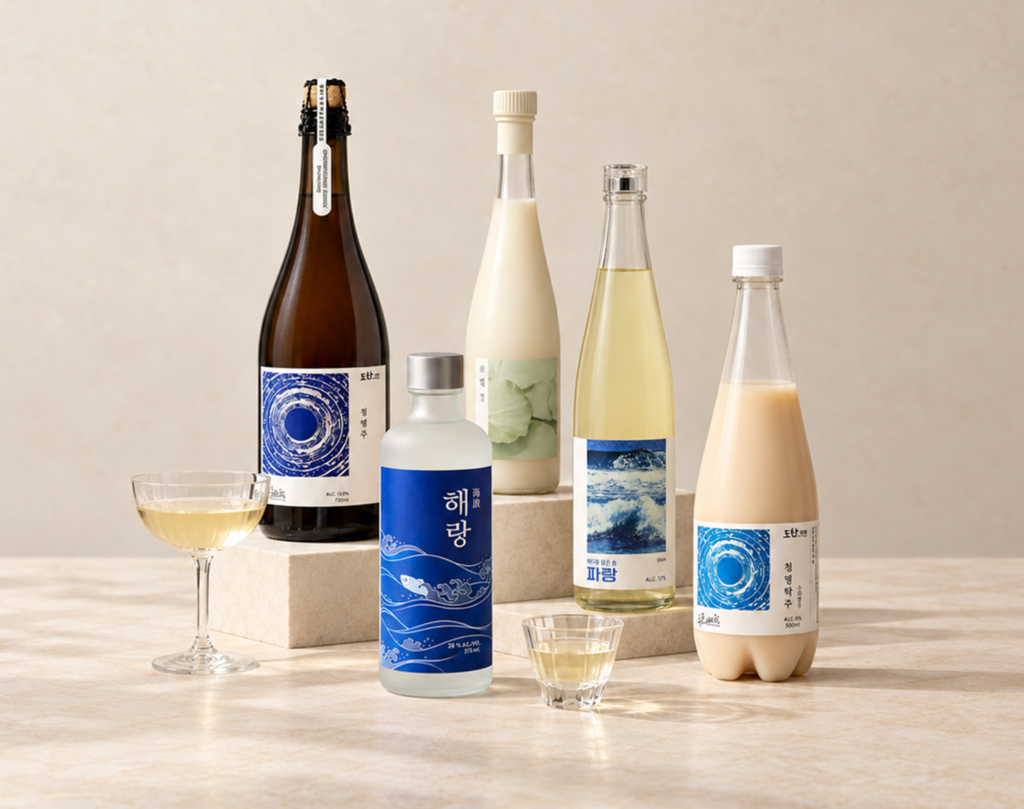
The list of five Korean alcohol labels spans: two takju, two yakju and one soju.
| Label | Type | ABV | Size | Price | Brewery (region) | Picked by |
|---|---|---|---|---|---|---|
| Dohan CheongMyeong Takju Sparkling | Sparkling takju | 8% | 900ml | $59.90 | Hanyeongseok’s Fermentation Research Institute (Jeongeup, Jeonbuk) | Eatanic Garden |
| Parang Yakju | Yakju (clear rice wine) | 13% | 500ml | $90.90 | Jinjeong Brewing (Gangneung) | Eatanic Garden |
| Chorokseom Takju | Raw takju | 12% | 375ml | $90.50 | Brewery Hieut (Yangpyeong, Gyeonggi) | Jungsik |
| Dohan Cheongmyeongju Sparkling | Sparkling yakju | 13% | 750ml | $90.50 | Hanyeongseok’s Fermentation Research Institute (Jeongeup, Jeonbuk) | Jungsik |
| Haerang Soju | Distilled soju | 28% | 375ml | $59.90 | Hanyeongseok’s Fermentation Research Institute (Jeongeup, Jeonbuk) | Eatanic Garden |
The 5 Korean Sool Labels At Culina
Dohan CheongMyeong Takju Sparkling (8% ABV, 900ml)
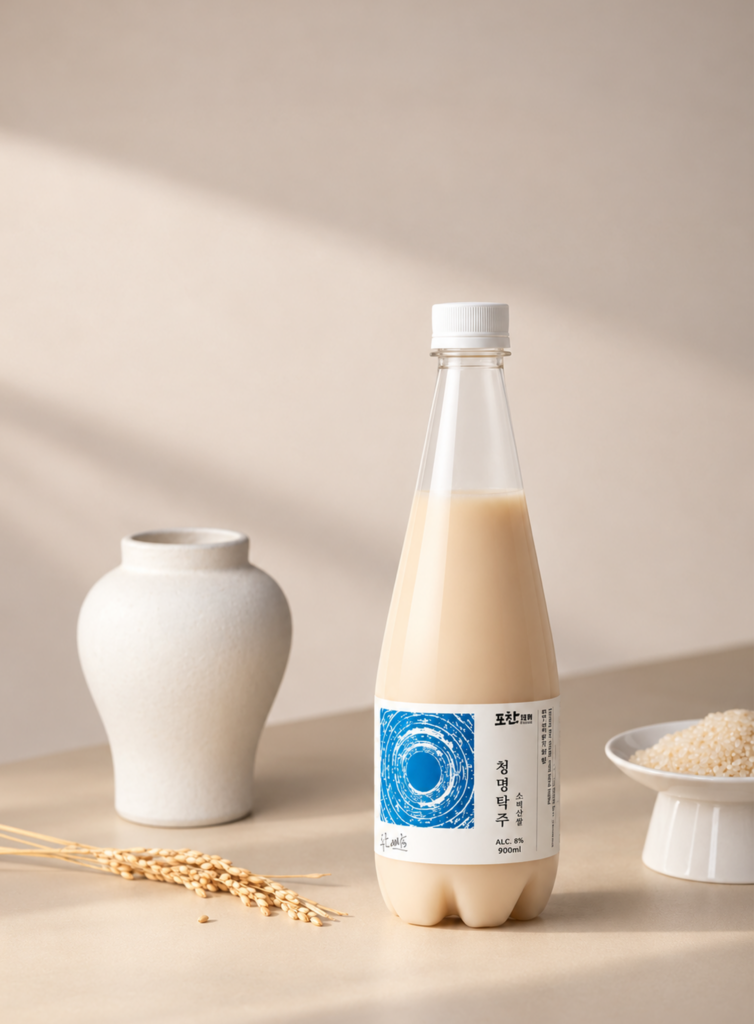
A sparkling take on Cheongmyeongtakju, a traditional Korean takju, made with Korean rice and nuruk. It comes from the institute of Han Young-seok, whom the brewery bills as Korea’s top master nuruk maker.
Expect gentle rice sweetness, crisp acidity, fruity aromas and soft bubbles. The producer suggests it well chilled as an aperitif, with lighter dishes, or in place of sparkling wine at celebrations.
Parang Yakju (13% ABV, 500ml)
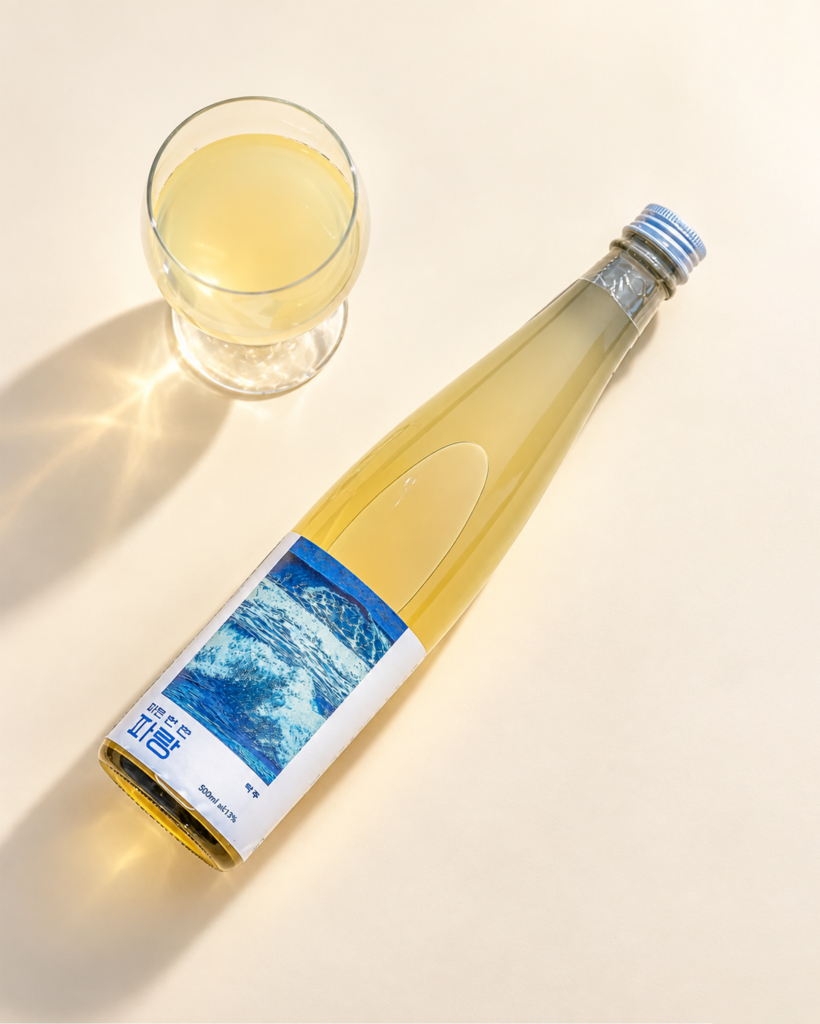
Named after the waves of Gangneung on Korea’s east coast, Parang is a clear rice wine based on Nokpaju, a recipe dating back to the Goryeo Dynasty.
It’s brewed twice using freshly harvested regular rice, glutinous rice and nuruk from Gangneung. The result is subtly sweet and nutty, with fruity acidity and a clean finish that makes it the most white wine-like of the five, and the easiest to pair with food.
Chorokseom Takju (12% ABV, 375ml)
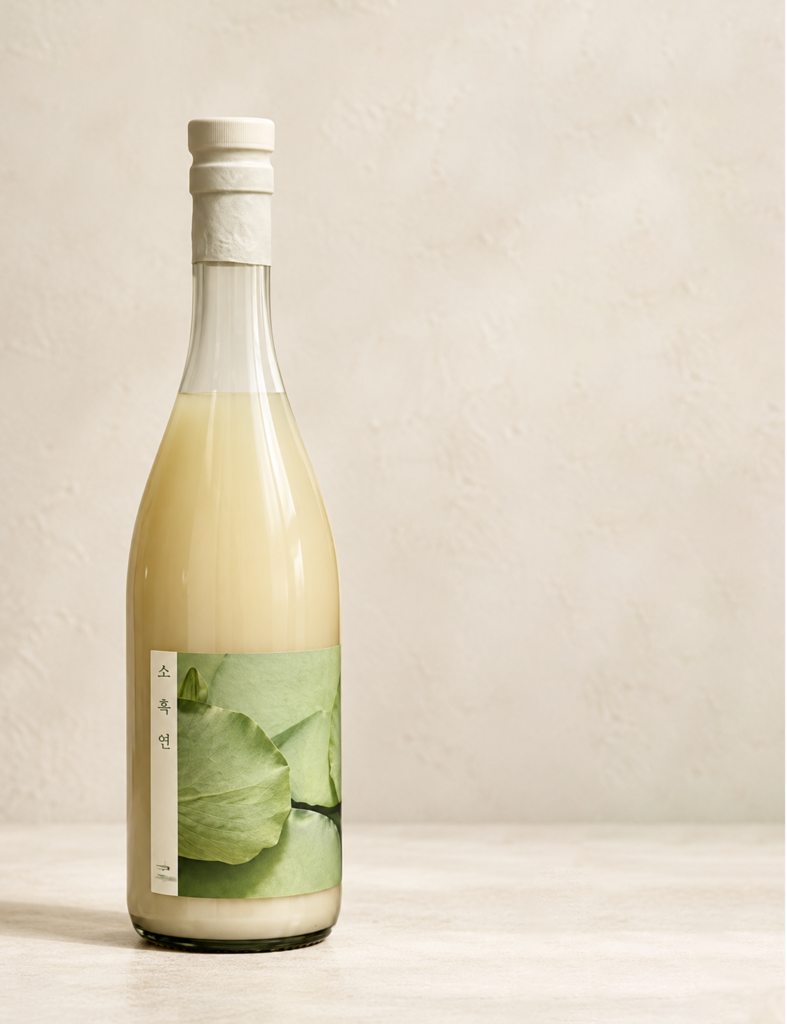
A raw takju from Brewery Hieut in Yangpyeong, made with local Chamdream rice, Baegok glutinous rice, Korean wheat nuruk and lotus leaves that the brewery grows itself.
It ferments slowly, then ages in traditional clay jars for over three months. The brewery describes smooth sweetness, refreshing acidity and plum and peach aromas that open up as the drink warms in the glass.
Dohan Cheongmyeongju Sparkling (13% ABV, 750ml)
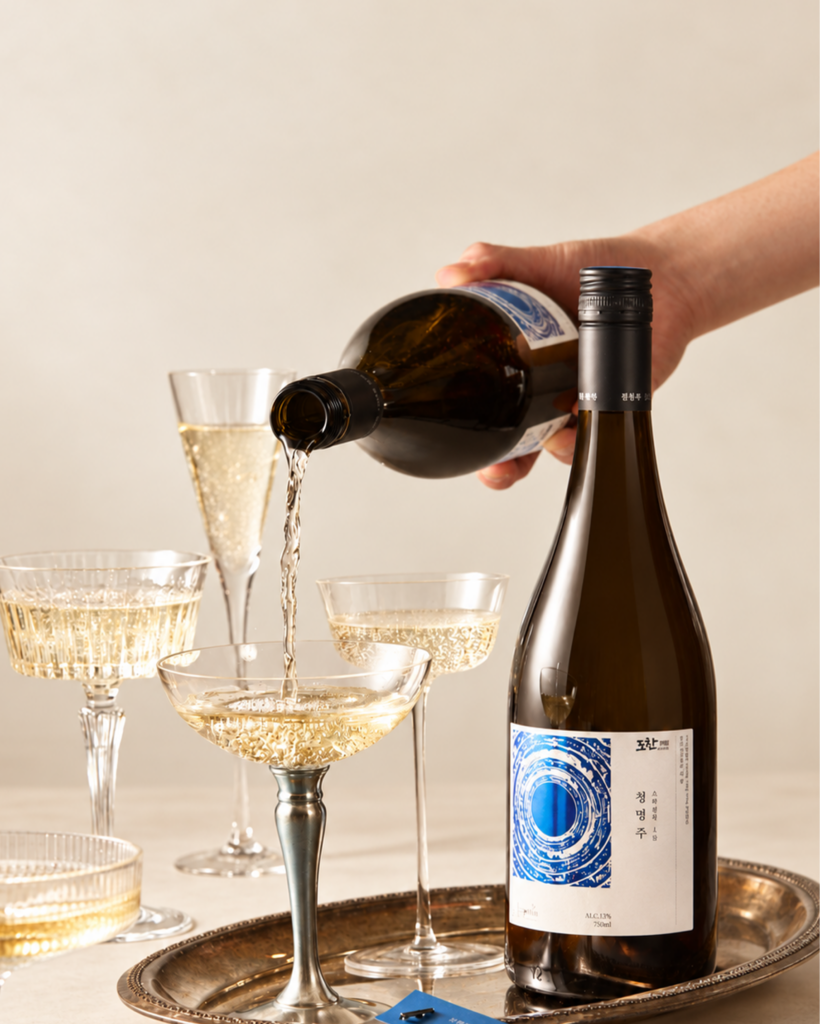
A sparkling version of Cheongmyeongju, a clear rice wine traditionally linked to Cheongmyeong, one of the 24 seasonal divisions of the traditional Korean calendar, which falls in early April.
It’s golden and clear, with fruity aromas, gentle sweetness and lively bubbles. Of the five, it’s the closest to Champagne, making it a good match for seafood and light starters.
Haerang Soju (28% ABV, 375ml)

A premium distilled soju made from Korean glutinous rice, water and nuruk using low-pressure vacuum distillation. It was developed with author and seafood specialist Jimin Kim of “Tasty Memoires” to pair with seafood, though it works with meat as well.
It’s the strongest bottle in the line-up, with a light grain aroma and a dry finish. The label is temperature-sensitive: blue waves and fish appear once the bottle is chilled below 8°C, which is its suggested serving temperature.
Where To Buy Korean Rice Wine In Singapore
All five labels are sold at Culina at COMO Dempsey, at both the retail store and the bistro. Mass-market makgeolli is easy enough to find at Korean grocers, but small-batch labels like these rarely make it to Singapore shelves.
Culina at COMO Dempsey: Key Information
| Detail | Information |
| Address | Culina at COMO Dempsey, 15 Dempsey Road, Singapore 249675 |
| Hours | Open daily, 11am-11pm |
| Price range | The five Korean alcohol bottles are priced at $59.90 or $90.50 |
| Halal status | Not halal |
Enjoy Korean food with these Korean alcohols with our guide to Korean restaurants in Singapore from Korea!
Frequently Asked Questions About Korean Sool At Culina
Where can I buy premium makgeolli in Singapore?
Five premium Korean sool labels, including two takju (makgeolli-style rice wines), are sold at Culina at COMO Dempsey, 15 Dempsey Road. You can buy them at the retail store or order them at the bistro.
What is makgeolli?
Makgeolli is a Korean rice wine made by fermenting rice and water with nuruk, a traditional starter cake (usually wheat-based) that carries wild yeasts and molds. It isn’t filtered, so it comes out milky white, lightly sweet, a little tangy and often slightly fizzy.
What is the difference between makgeolli and takju?
Takju means “cloudy liquor” and is the broader category of unfiltered Korean rice wine. Makgeolli is the everyday name for it, so the two terms largely overlap.
What is the difference between makgeolli, yakju and soju?
Makgeolli is a cloudy, unfiltered rice wine. Yakju is the clear, refined liquid drawn from the top of the fermented mash. Traditional soju is distilled from fermented rice mash, so it is much stronger.
Did Jungsik and Eatanic Garden make these drinks?
No. Each label comes from an independent Korean brewery. Jungsik and Eatanic Garden selected and served them during the Formula 1 Singapore Grand Prix period.
Which of the five labels is the strongest?
Haerang Soju, a distilled rice soju at 28% ABV. The rice wines range from 8% to 13% ABV.
Should makgeolli be served cold?
Yes. Makgeolli and other Korean rice wines are best served chilled. Haerang Soju’s label changes to show blue waves and fish once it drops below 8°C, its suggested serving temperature.
Follow MiddleClass.SG on Facebook, Instagram, TikTok, and Telegram for more food, travel, and trending stories.