Ask most Singaporeans to name a Korean dish and you’ll get the same shortlist every time: KBBQ, kimchi jjigae, maybe a seafood pancake if they’re feeling adventurous. Gamjatang rarely makes the cut, despite being one of the most eaten comfort foods in Korea. GAMJA, a new Korean restaurant that opened on 3 September at 21 Boon Tat Street, Telok Ayer, is out to change that, one $15.80 bowl at a time.
The interior is clean and modern, but you’ll catch touches of Korea throughout, from the Korean-language menus to small details around the space. It sets the tone early: this isn’t trying to be a flashy concept restaurant; it’s aiming for something closer to what you’d actually find in Seoul.
What Is Gamjatang, And Why Should You Care?
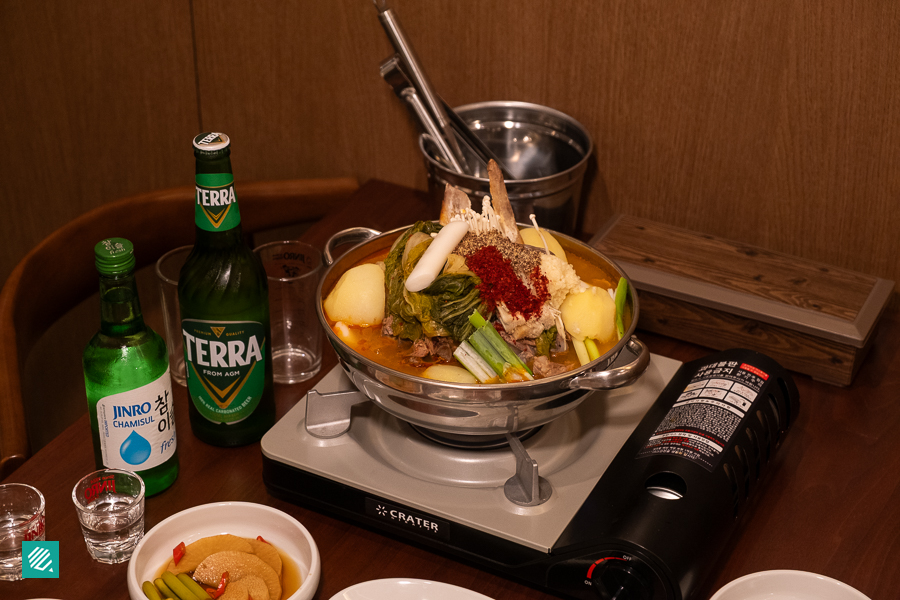
Gamjatang (감자탕) is a slow-simmered pork bone soup, usually built around meaty pork spine bones, potatoes, perilla leaves, and a deep, savoury-spicy broth. It’s the kind of dish Koreans order after a long day, or as the centrepiece of a late-night meal with soju. Think of it as Korea’s answer to bak kut teh: bone-in, brothy, and better shared.
Despite that, Gamjatang has stayed under the radar in Singapore’s Korean food scene, which tends to be dominated by KBBQ joints and cafe-driven concepts. GAMJA is betting that’s about to change.
Meet The Founders Behind GAMJA
GAMJA is helmed by co-founders Shin Jae-Yoon (신재윤) and Nam Wan-Hyuk (남완혁). Nam is a familiar name in Korea’s F&B scene, having built several dining concepts including Mister Gyoza (미스타교자), Andong Silbi (안동실비), and Woojik Seoul (우직서울).
On why GAMJA exists, Shin Jae-Yoon puts it simply:
“Gamjatang is not a rare dish in Korea. In fact, it’s quite common. But the feeling of being able to go into a Gamjatang place and leave feeling satisfied, without paying exorbitant prices, that’s something we want to provide to our diners. That’s why we’ve kept our bowl at $15.80.”
What We Ordered
GAMJA runs two menus: a pared-down lunch set built for quick, solo meals, and a fuller dinner spread designed for sharing. We tried both.
Lunch: Traditional And White Pork Bone Soup
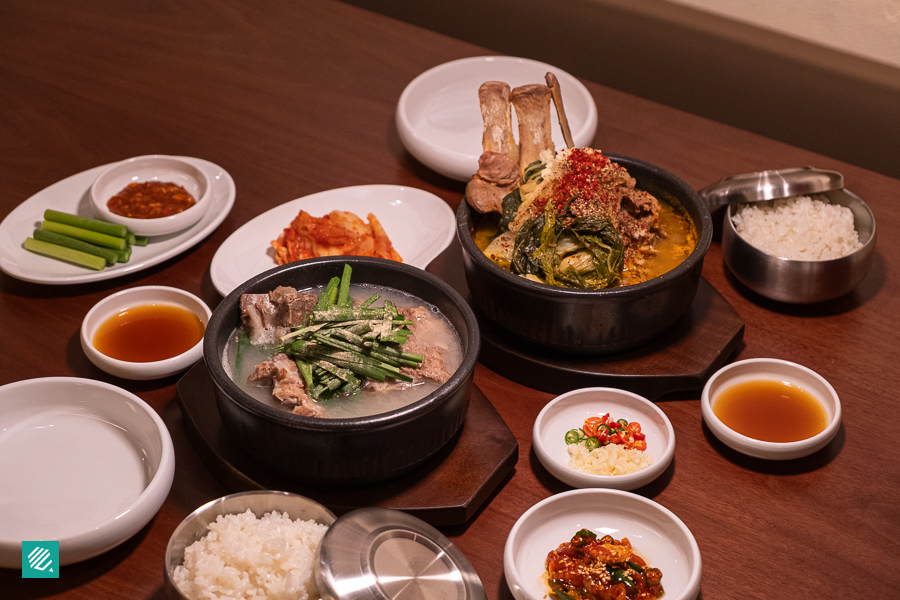
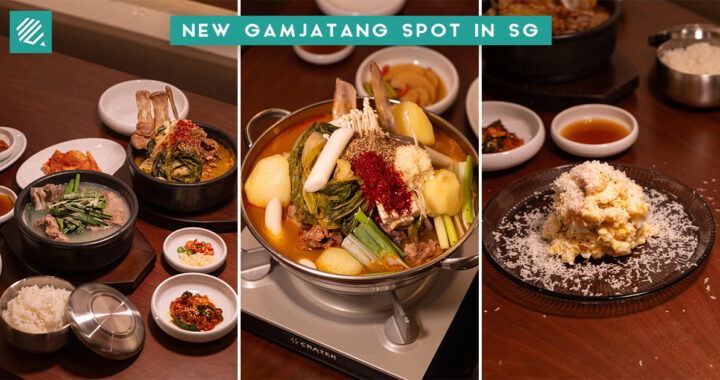
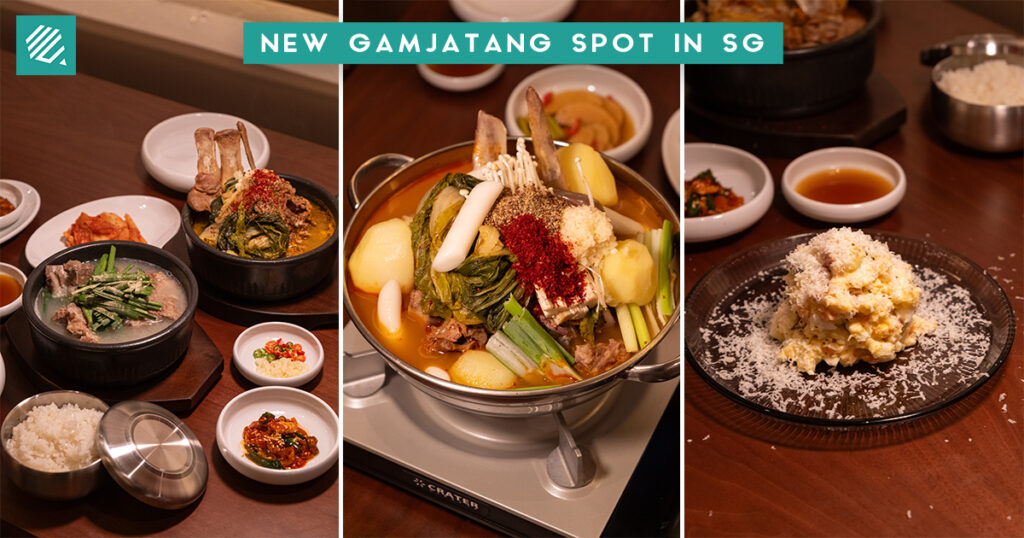
We started with the Traditional Pork Bone Soup ($15.80) and the White Pork Bone Soup ($15.80), both served with rice. Both bowls were generous, packed with meat and filled right to the brim, a solid amount of food for the price. The Traditional Pork Bone Soup was reminiscent of the ones we’ve had in Korea: not too gravy-like, and genuinely flavourful.
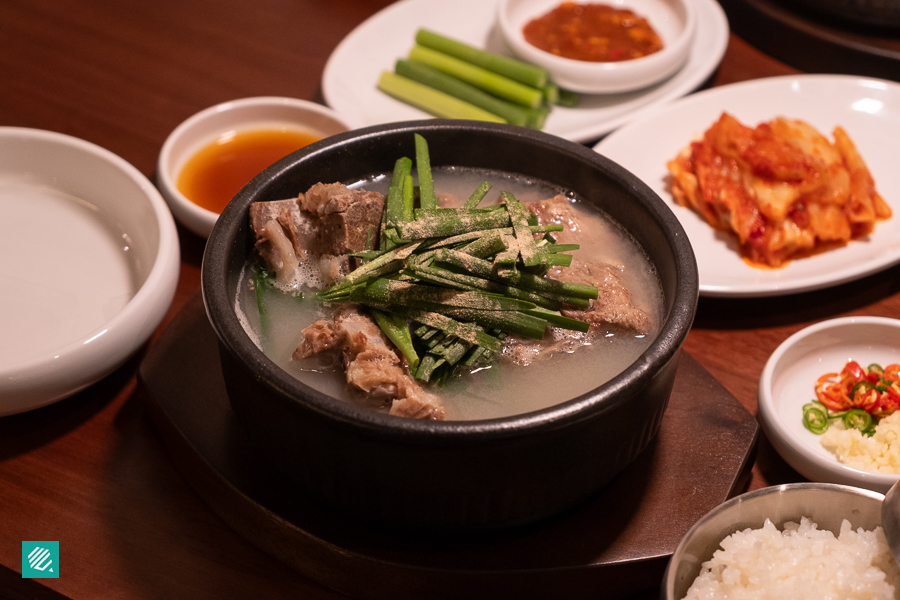
The White version was refreshing and non-spicy, though it comes with garlic and chilli on the side if you want to spice it up yourself.
The lunch menu offers five Gamjatang variations in total: Traditional, White (non-spicy), Aged Kimchi ($17.80), Boneless ($17.80, limited), and Perilla Seed ($18.80, non-spicy). We didn’t get to try all five on this visit, but we’re planning to come back for the Perilla Seed version; it sounds like an interesting one.
Dinner: Original Pork Gamjatang, KBBQ, And The Ramyeon Finish
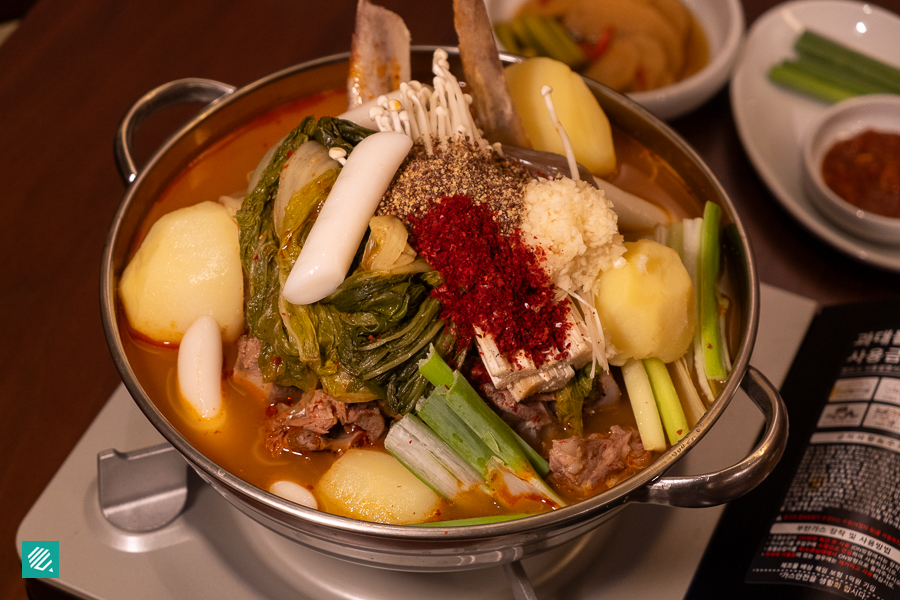
For dinner, we ordered the Original Pork Gamjatang (from $53), sharing-sized and built for the table. Compared to the lunch bowl, the dinner version comes loaded with more ingredients: glass noodles, rice cakes, and whole chunks of potato cooked to perfection. As it continues to boil at the table, the broth reduces, and the flavour deepens, giving the meal an entirely different character by the time you’re halfway through.
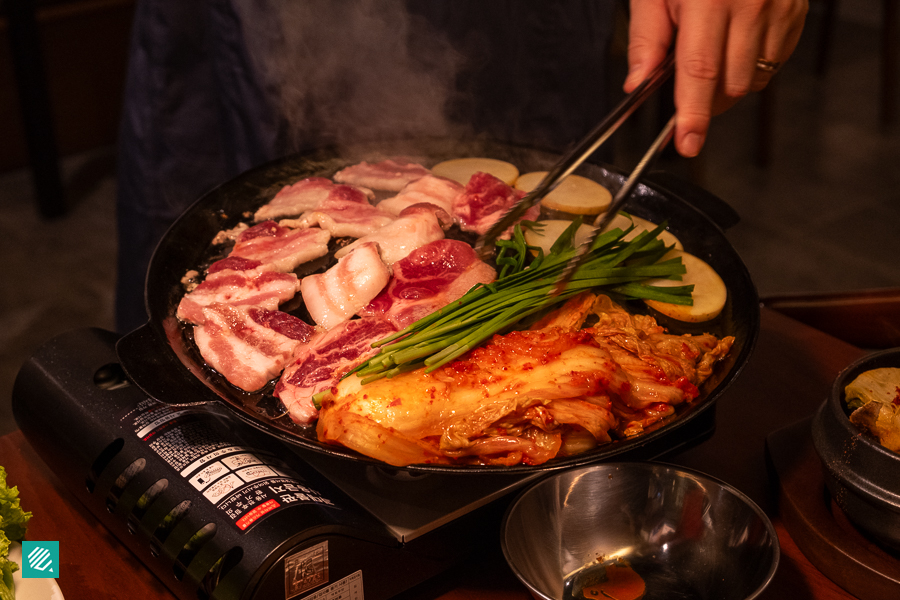
We paired it with Korean BBQ, specifically pork belly and pork neck ($28 each) off the grill. The meats come with no marinade, are simply grilled over heat, and are served alongside slices of gamja (potato). We’d recommend pairing the meat with those potato slices for the full GAMJA experience, and the grilled kimchi that came with it was a genuine highlight.
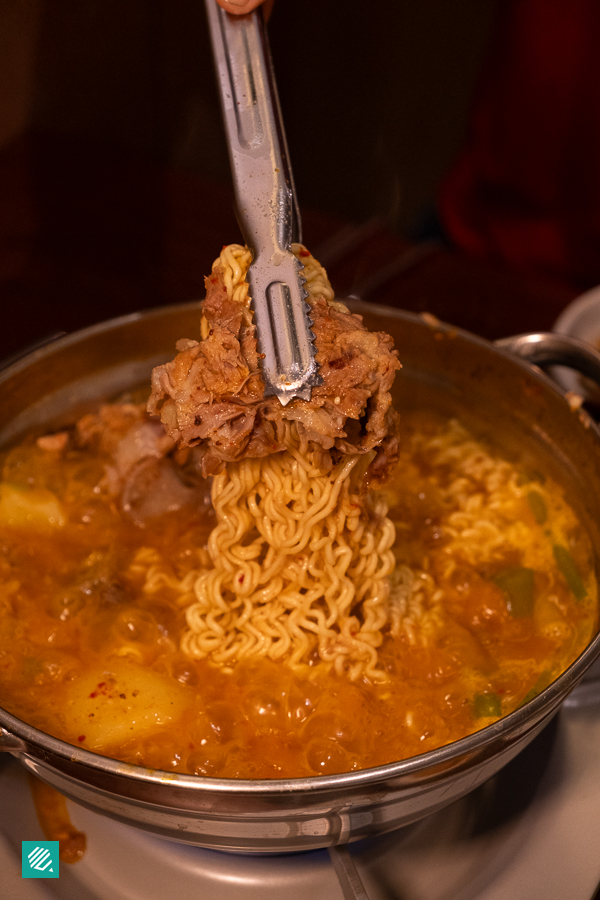
The move that stood out most: once we’d worked through around half the Gamjatang, we added ramyeon noodles directly into the remaining broth (available as an additional order). The noodles soak up all the soup, turning it into an even heartier dish, we imagine this would be especially satisfying on a rainy day.
The Potato Salad, With A Tableside Twist
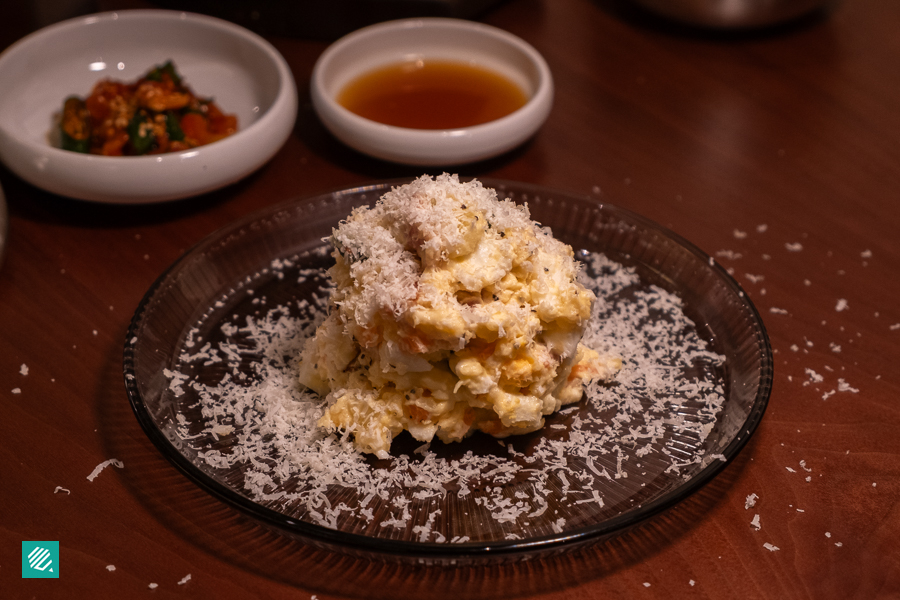
GAMJA’s signature potato salad ($10) comes with a nice bit of theatre: a tableside shaving of Grana Padano cheese over the salad, which adds a pleasant cheesiness to the dish. The chunks of bacon mixed through were also quite substantial, more generous than we expected for a $10 side.
Ending The Meal: Fried Rice And Chapaghetti
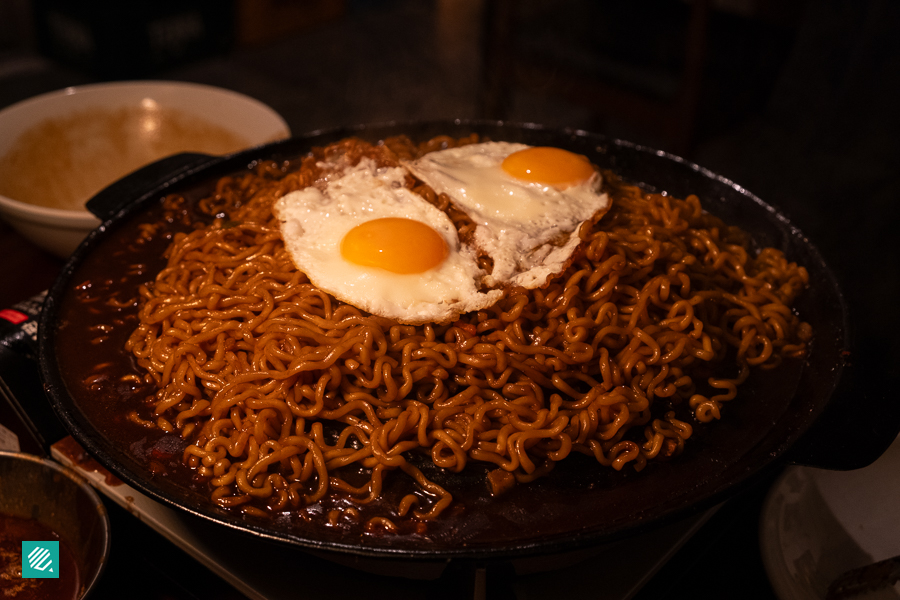
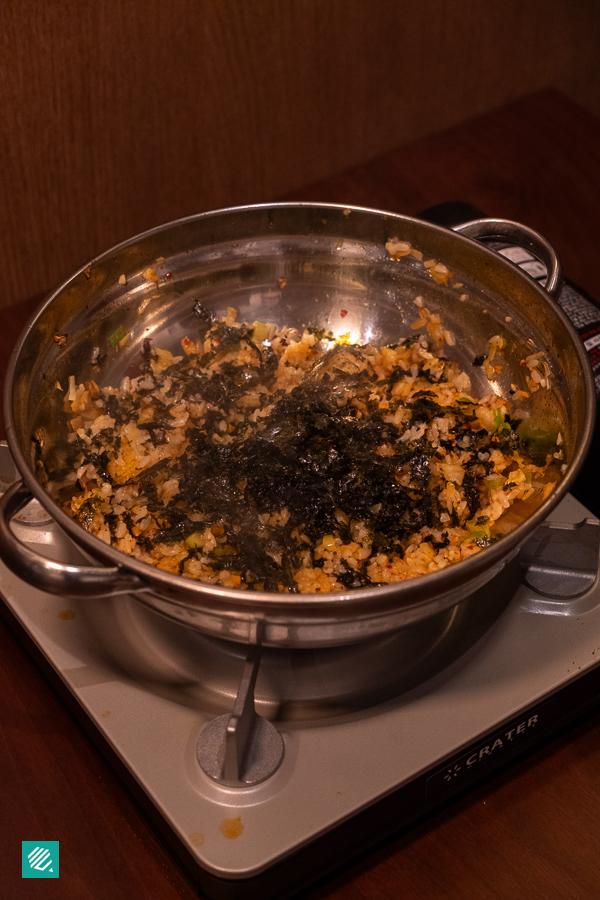
We closed out with the fried rice and chapaghetti (jjapaghetti, stir-fried on the leftover KBBQ grill), a common way to end a Korean BBQ meal in Korea, made using whatever’s left behind. The fried rice is close to a must-order; it’s almost the quintessential way to end a Korean meal. The chapaghetti is cooked directly on the grill, and whether it’s worth ordering really comes down to whether you’re a fan of chapaghetti’s distinct flavour to begin with.
A nice touch for anyone new to the dish: order the KBBQ Set, and you’ll still get a small bowl of Gamjatang on the side, GAMJA’s way of getting first-timers to try the dish they’re actually known for.
*For the time being, GAMJA will not be serving their KBBQ menu to focus on their signature items: Gamjatang and Grilled Spicy Pork Ribs
The Soju Situation: Shots, Not Just Bottles
If there’s one thing that’ll stand out to regulars of Singapore’s Korean dining scene, it’s this: GAMJA sells soju by the shot (짜배기, $10), alongside full bottles and glasses of soju, beer, and makgeolli.
In Korea, ordering soju by the shot is completely normal. In Singapore, where diners are usually expected to commit to a full bottle, it’s a rarer sight. That makes solo dining and casual, low-commitment drinking a lot more accessible here, whether you’re stopping by after work or just want one drink with your meal instead of a whole bottle you won’t finish.
The Vibe
GAMJA’s space is clean, modern, and unfussy, built to work as easily for a quick solo lunch as it does for a longer dinner with friends over soju. There’s no elaborate concept here: it’s a straightforward, comfortable room that lets the food (and the shared bowls of stew) do the talking.
The Verdict
Rating: 4.5 / 5
GAMJA is definitely worth returning to, especially for lunch, where a generous bowl of Gamjatang at this price point is hard to beat. Dinner is worth exploring with a group of friends too: Gamjatang and soju is such a classic pairing in Korea, and it’s genuinely nice to see that combination done properly in Singapore.
If you’ve never had Gamjatang, GAMJA is a low-risk, low-cost way to try it: a solo lunch bowl starts at $15.80, cheaper than a lot of casual Korean meals in Telok Ayer. If you already know and love the dish, the range of broths (spicy, non-spicy, kimchi-aged, perilla) and the shot-pour soju option give you more reasons to linger.
GAMJA
21 Boon Tat Street, Singapore 069620
Weekdays
Lunch: 11am-3pm (Last order 2:30pm)
Dinner: 5:30pm-11pm (Last Order 10:30pm)
Weekends & PH
12pm to 10pm (No Break Time)
Frequently Asked Questions about GAMJA
What is Gamjatang?
Gamjatang is a Korean pork bone soup made with meaty pork spine bones, potatoes, perilla leaves, and a savoury, often spicy broth. It’s a widely eaten comfort food in Korea, though less commonly found in Singapore.
Where is GAMJA located?
GAMJA is located at 21 Boon Tat Street, Singapore 069620, in the Telok Ayer dining district.
How much does a bowl of Gamjatang cost at GAMJA?
Lunch bowls start from $15.80 for the Traditional and White Pork Bone Soup, up to $18.80 for the Perilla Seed version. Sharing-sized dinner portions range from $53 to $70 depending on the variation and size.
Does GAMJA serve alcohol?
Yes. GAMJA offers soju, beer, and makgeolli, including soju sold by the shot (짜배기, $10), which is uncommon among Korean restaurants in Singapore.
Is GAMJA good for solo dining?
Yes. The lunch menu is built around single-serve Gamjatang bowls, and the option to order soju by the shot rather than by the bottle makes it easier to dine and drink alone.
Can you add noodles to the Gamjatang at GAMJA?
Yes. Ramyeon noodles can be ordered as an add-on to throw into the remaining broth once you’ve worked through most of the soup, a classic way to finish the pot in Korea.
*This article is brought to you in collaboration with GAMJA.
*Follow MiddleClass.sg on Facebook, Instagram, TikTok, and Telegram for more food, travel, and trending stories.