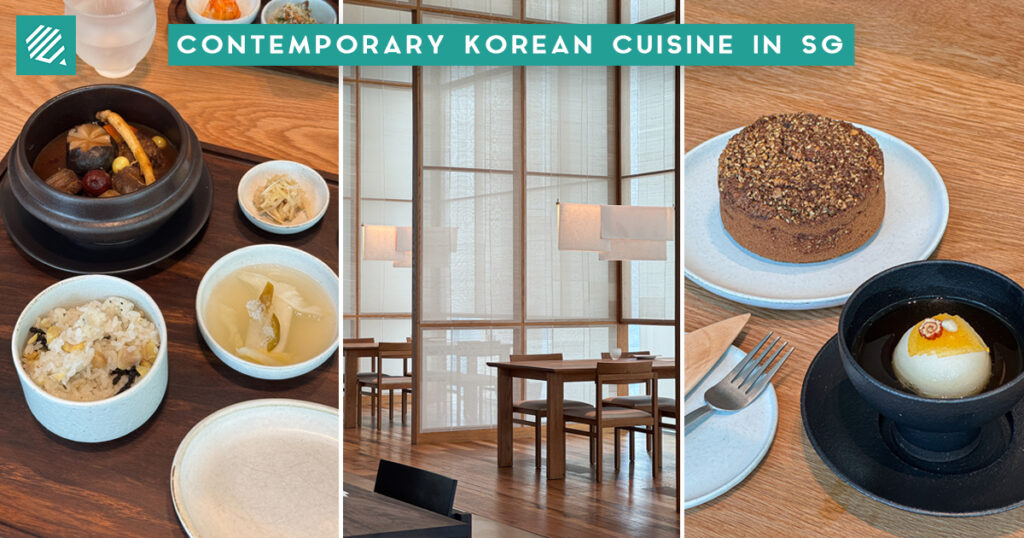
After a long but highly anticipated wait, the MiddleClass.SG team finally visited Na Oh, a modern Korean restaurant located within the Hyundai Innovation Centre in Jurong West.
Helmed by Chef Corey Lee of benu – a three Michelin-starred restaurant in San Francisco – Na Oh has been on our radar for a while. With consistently strong reviews, we were curious to see how the experience would compare.
Simple, Korean-Inspired Interior
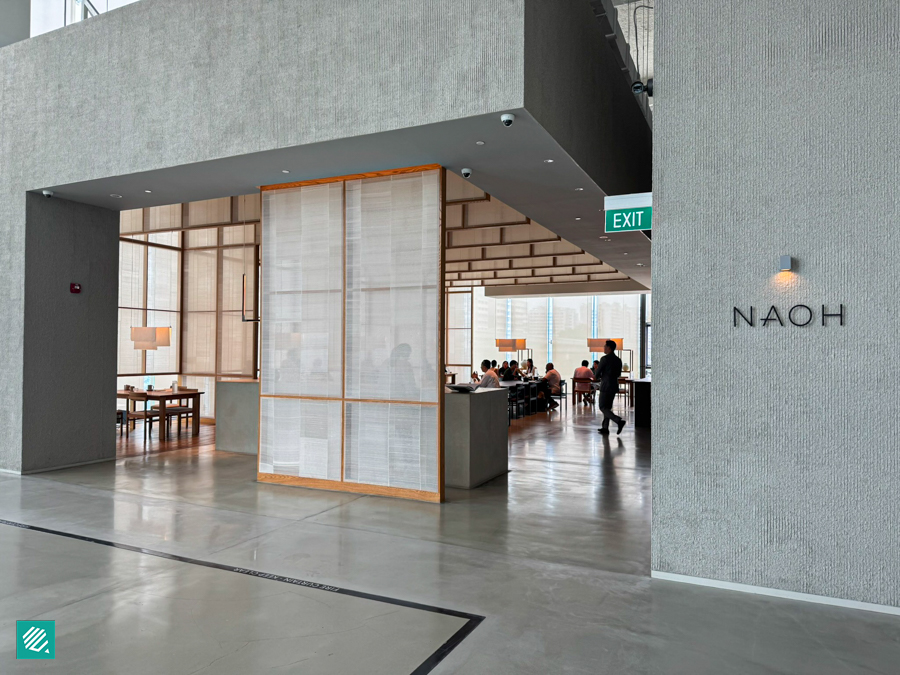
Na Oh sits quietly on the third floor, tucked away past Hyundai’s hydroponic smart farms where lettuce and perilla leaves are grown on-site.
The walk-in already sets the tone: calm, intentional, and removed from the bustle outside.
At the entrance, you’re greeted by a display of onggi (traditional Korean clay pots), where the restaurant ferments its own sauces, or jang.
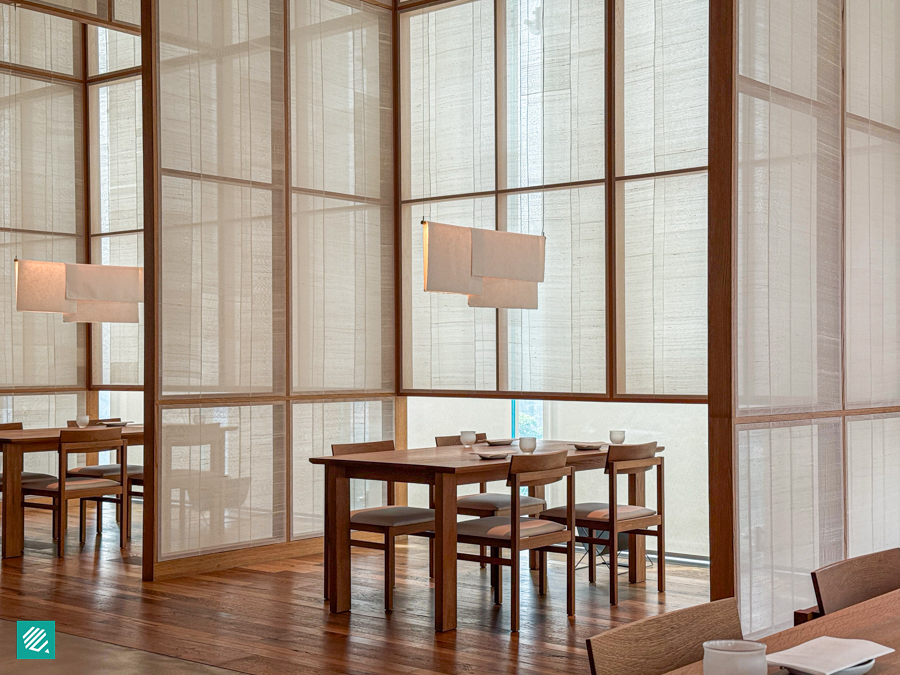
Inside, the space is clean and airy, with subtle Korean elements throughout. Hanok-inspired dividers segment the dining area, while ceramics and traditional ornaments add character.
The restaurant is more intimate than expected, but tables are well spaced, making it feel comfortable rather than cramped.
Na Oh Menu
Na Oh offers a seasonal three-course menu, structured simply: an appetiser, a choice of three Jinjitsang (main sets), and dessert.
We visited during the final week of their Winter menu ($78++).
At the time of writing, the restaurant has already transitioned into its Spring menu (something to note if you’re planning a visit).
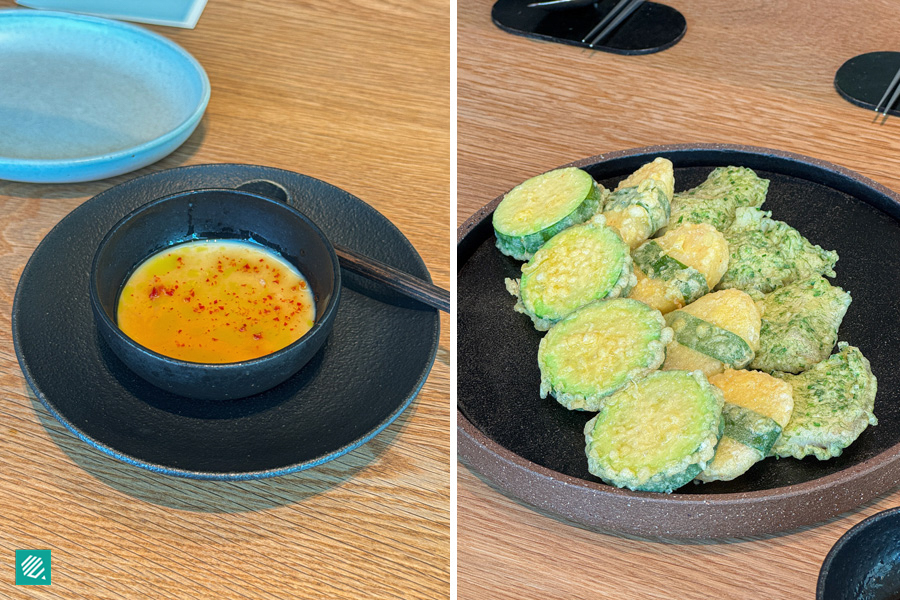
The meal began with Homemade Tofu with Aged Soy Sauce.
Made with locally sourced soybeans, the tofu was soft and fragrant, closer to silken tofu than the Korean-style versions. The aged soy sauce added depth and umami.
Next was the Assorted Jeon, which highlighted a range of Korean ingredients. The selection included Korean squash, mountain yam, and sablefish paired with maesaengi seaweed.
The sablefish stood out most, with its naturally rich, fatty sweetness.
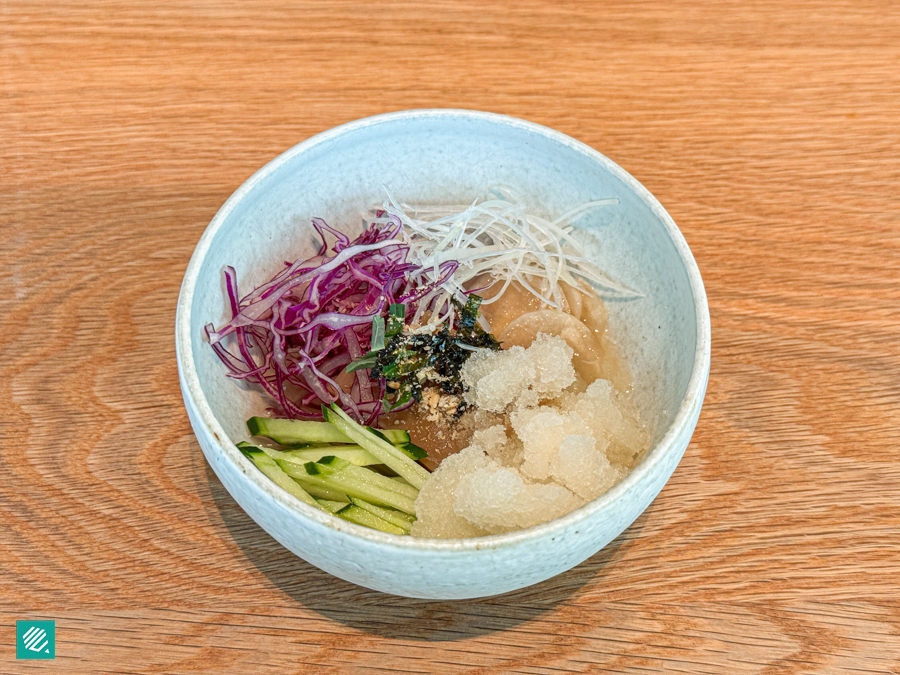
Something special was the Acorn Jelly and Beef Tendon Salad. Served with an icy, savoury beef broth, this was crunchy, appetising and refreshing!
The acorn jelly didn’t have a strong taste but a subtle nuttiness, pairing well with the vegetables and tangy dressing.
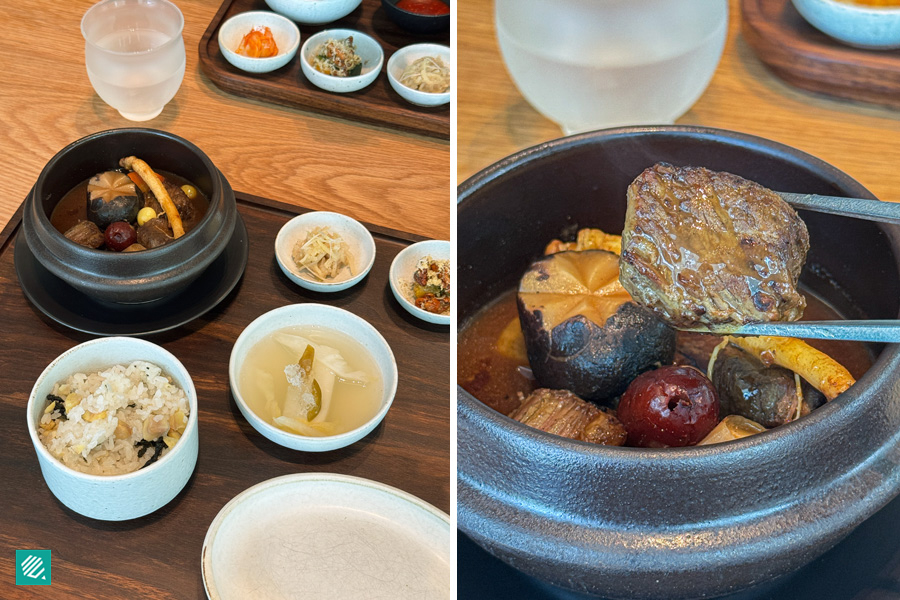
For the Jinjitsang, I went with the Galbijjim set, which came with housemade banchan and chestnut-thistle sotbap (claypot rice).
The highlight was the Hanbang-style braised short rib, finished over charcoal.
Despite its simple presentation, the meat was tender and deeply flavoured, carrying a rich, slightly sweet marinade with a subtle smokiness from the charcoal.
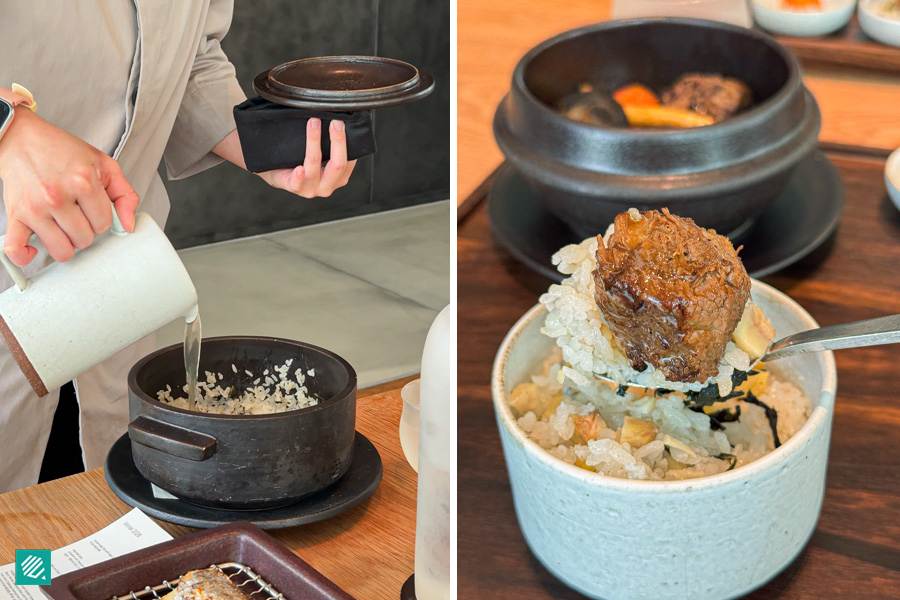
The sotbap complemented the dish well. The rice absorbed the sauce, while the chestnuts added a mild nuttiness that rounded everything out.
Just like in a classic Korean restaurant, the sotbap is finished with a savoury broth to create a light porridge to enjoy the nurunji – toasted rice – at the bottom of the pot.
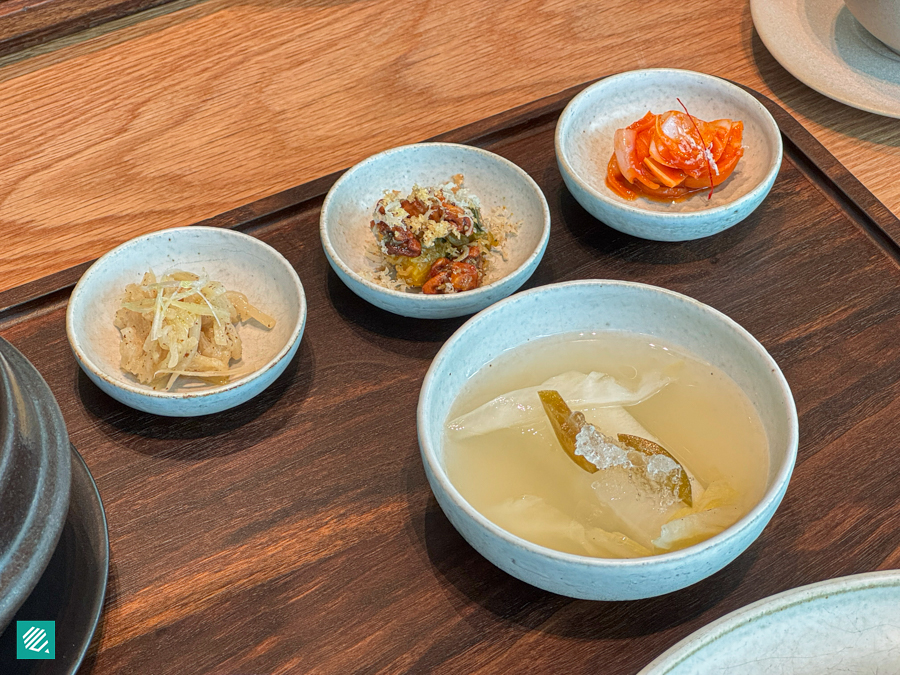
The banchan selection was also unique, featuring items like marinated lotus root and pumpkin paired with crunchy anchovies, which were a refreshing change from the usual lineup.
View this post on Instagram
My companion opted for the Ground Soybean Stew with Mud Crab, a thicker and more robust variation of the usual tofu stew.
The broth was savoury with a nice spice, balanced by natural seafood sweetness. Mixed with rice, it made for a comforting, satisfying bite.
The set also included grilled Jeju pork collar suyuk.
It had a slight resemblance to char siu – lightly caramelised on the outside – and was paired with a pear-minari geotjeori that added a fresh, crisp contrast.
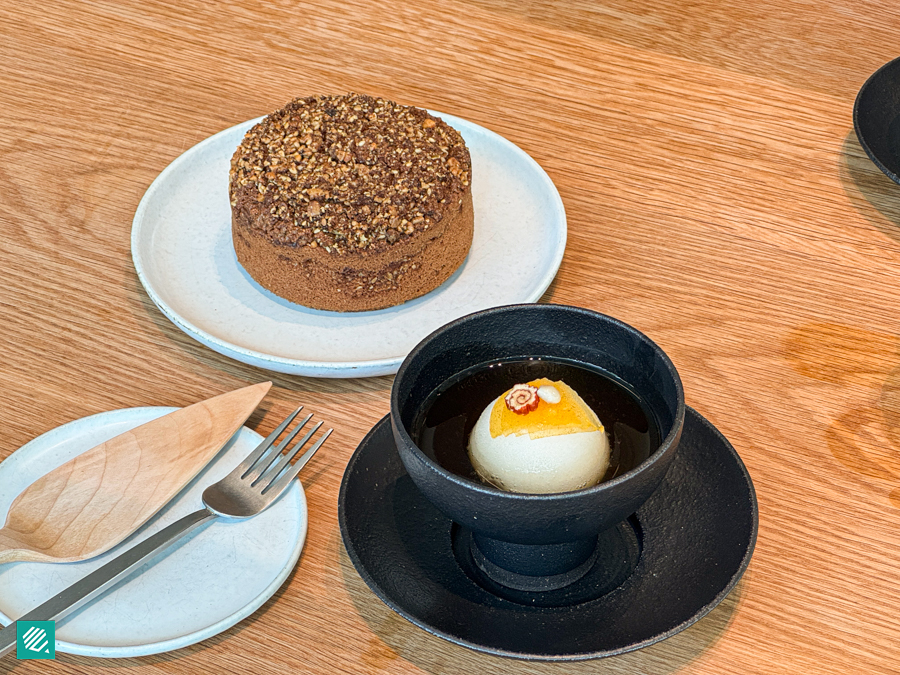
Dessert was a combination of Injeolmi cake and pear sorbet in sujeonggwa, a traditional Korean cinnamon punch.
The pear sorbet was clean and refreshing, while the cake was soft with a subtle chew from the injeolmi.
Together, it ended the meal on a light but satisfying note.
Is Na Oh Worth It?
If you’re wondering whether Na Oh is worth trying, the short answer is yes.
The flavours are unpretentious and comforting, with an emphasis on balance. It feels closer to a home-style Korean meal than a typical tasting menu.
Considering the quality ingredients, thoughtful execution, and portion sizes, the price point feels reasonable. If you’re looking for a quieter, more grounded Korean dining experience in Singapore, Na Oh is one to consider.
Check out more Korean restaurants in Singapore:
- Seoul & So: Modern Korean Steakhouse In National Gallery
- Keum Eun Don: Popular Korean BBQ Restaurant From Seoul Now In Hillview With Aged Pork & Woodae Galbi
- Obongzip (오봉집): Korean Spicy Stir-Fried Octopus, Viral XXL Grilled Tteok In Tanjong Pagar
View this post on Instagram
Na Oh
3rd Floor, Hyundai Motor Group Innovation Center Singapore, 2 Bulim Link Singapore 649674
Tue- Sat: Lunch, 11.30am-4pm (last seating at 2pm). Dinner, 6pm-10pm (last seating at 8pm)
Closed on Mondays and Sundays.
*This was an independent review by MiddleClass.SG.
*Follow MiddleClass.sg on Facebook, Instagram, TikTok, and Telegram for more food, travel, and trending stories