


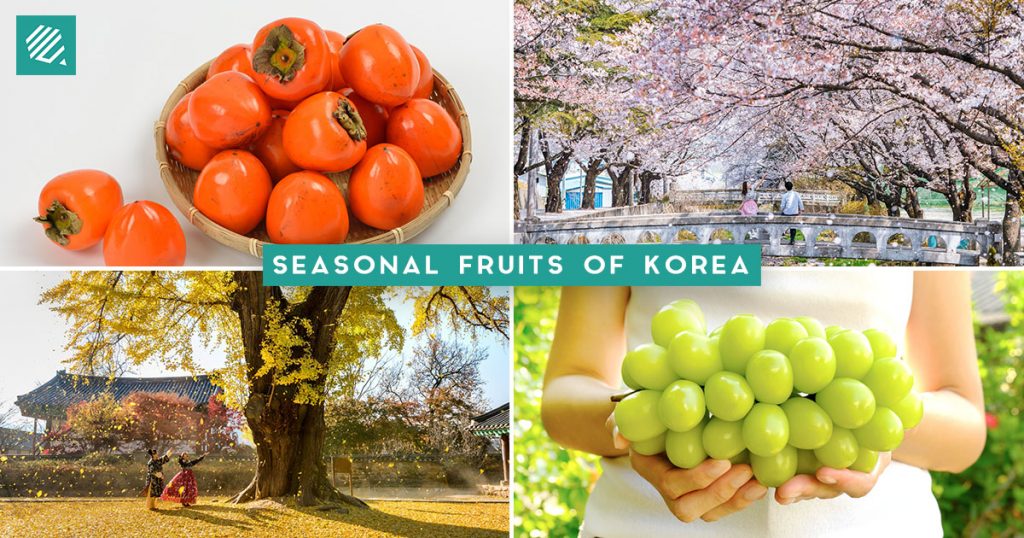
A Korea fruit season chart can help you discover which fruits are best to try throughout the year, from strawberries in spring and melons in summer to pears in autumn and Jeju citrus fruits in winter. Known as 제철과일 (jeh-cheol-gwa-il), Korean seasonal fruits are typically freshest, sweetest and easiest to find when enjoyed during their peak season.
Best Korean Fruits in Season at a Glance
|
Season |
Korean Fruits in Season |
Best Time to Try |
|
Spring |
Strawberries |
January to May |
|
Summer |
Korean melon, watermelon, peaches, nectarines, Campbell grapes |
June to August |
|
Autumn |
Korean pears, apples, persimmons |
September to November |
|
Winter |
Hallabong, Jeju mandarins, Shine Muscat |
November to February |
What Are the Best Korean Fruits To Have in Spring?

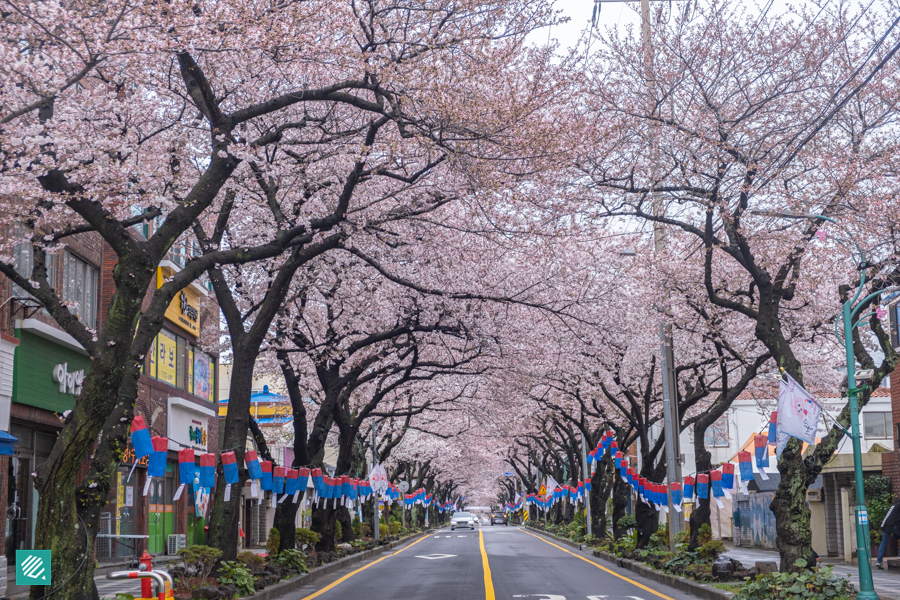
- Spring fruits in Korea mainly include strawberries.
- Korean strawberries are in season from January to May, especially March and April.
With cherry blossoms blooming and the weather getting warmer, Spring in Korea is a beautiful time. A fruit that goes well with the romantic season is Strawberries, which are in season from Jan all the way to May. During the months of March and April, strawberries can be seen in supermarkets and strawberry picking is a fun activity to explore.
- Check out where to do strawberry picking in Korea here.
- Learn more about the different varieties of strawberries in Korea here.
What Fruits Are in Season in Korea During Summer?

- Summer fruits in Korea include Korean melons, watermelons, peaches, nectarines and Campbell grapes.
Summer is a youthful season in Korea associated with water activities, sports, and travel. During this time, Koreans love to visit the beach and coastal cities like Yangyang to beat the heat.
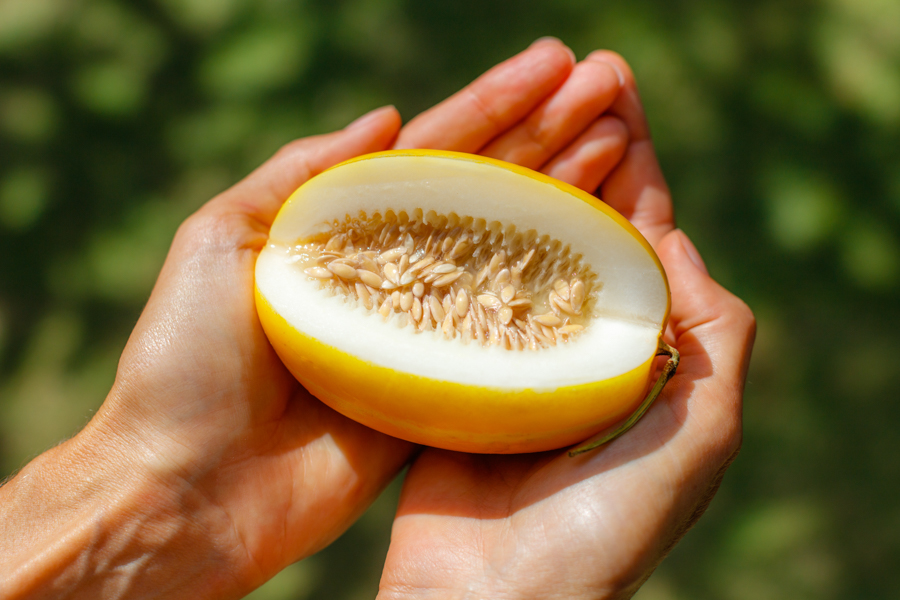
Hence, the fruits that represent Summer in Korea tend to be refreshing and cooling, such as Korean melons and Watermelons!
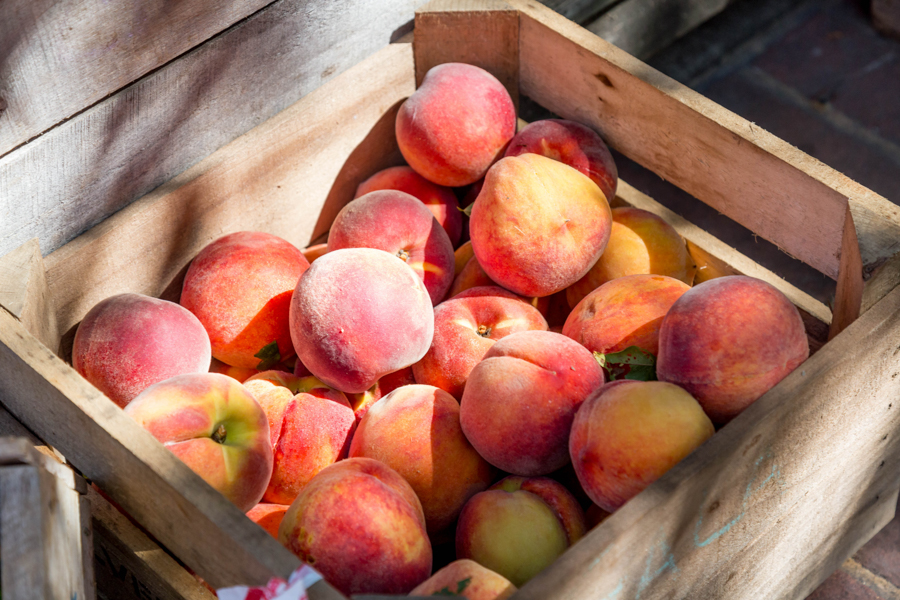
Towards the peak of summer, around August, fruits like Peaches and Nectarines are in season. They are extremely juicy and can easily be bought from fruit trucks or in supermarkets.
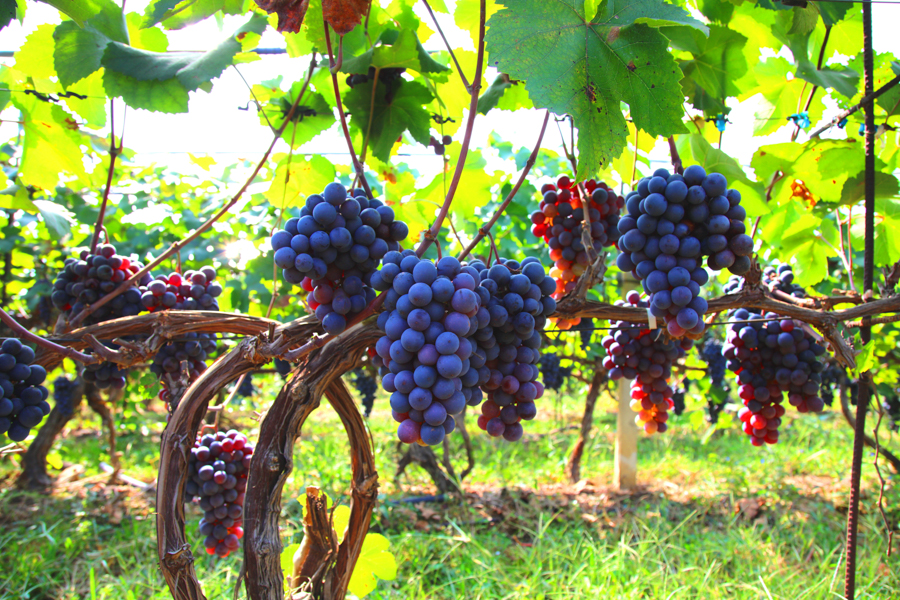
One last fruit you must try is Campbell Grapes. These dark purple grapes are large, juicy with a unique wine-like flavour! These can be enjoyed with the skin on or in refreshing desserts like jelly.
What Fruits Are in Season in Korea During Autumn?

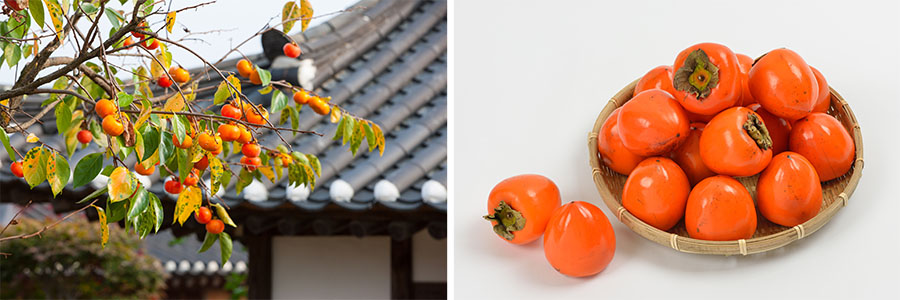
- Autumn fruits in Korea include Korean pears, apples and persimmons.
- These fruits are crisp, sweet and commonly enjoyed fresh or dried.
During Fall, one of the most well-known fruits to be in season are Persimmons. The bright coloured orange fruit is enjoyed both fresh and dried, popular for its jammy texture and sweet flavour. Don’t be surprised to see people drying persimmons outside their houses during fall!
Other popular autumn fruits in Korea are Pears and Apples, with Korean varities being big, crisp and juicy compared to their western counterparts.
What Fruits Are in Season in Korea During Winter?


- Winter fruits in Korea include Hallabong, Jeju mandarins and Shine Muscat.
Winter in Korea can be extremely cold and dry. However, the fruits in season during winter are nothing close to the weather! Hallabong from Jeju is one of the must-eats during winter. With its strong citrusy flavour and juicy flesh, the fruit can be enjoyed on its own or in different forms like juice or jam.
If you can’t find Hallabong, mandarin oranges from Jeju are also in season during winter.

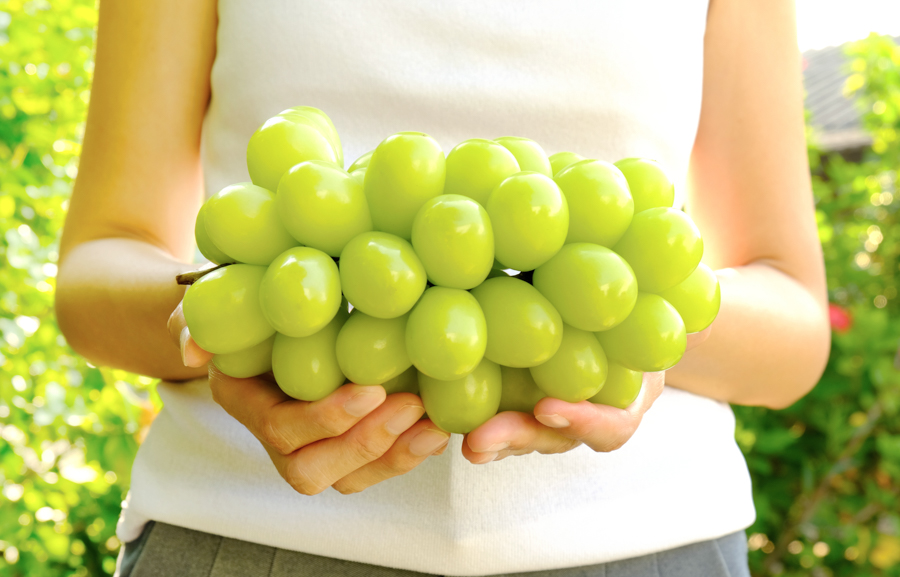
Around November/December, the infamous Shine Muscat is in season. These bright-green grapes are huge in size, crisp and. While they are well-known for being delicious, they tend to be on the pricier side, making it a winter delicacy!
What Fruits Are There in Korea?
Even if you’re not someone who seeks out fruits when overseas, these seasonal fruits in Korea are too good to be missed! Keep in mind these fruits when visiting a traditional market in Korea and grab some to snack on back in your hotel room.
For more information about travelling in Korea, go to https://english.visitkorea.or.kr
*This post is brought to you in partnership with Korea Tourism Organization Singapore


Frequently Asked Questions About Korean Seasonal Fruits
What is a Korea fruit season chart?
A Korea fruit season chart is a guide that helps you see which fruits are usually at their best in Korea throughout the year. It is useful for travellers who want to know what fruits to look out for at markets, supermarkets or fruit stalls during their trip.
What fruits grow in South Korea?
South Korea grows a wide variety of fruits, including strawberries, Korean melons, watermelons, peaches, nectarines, grapes, pears, apples, persimmons, Hallabong and mandarin oranges. Many of these fruits are closely linked to Korea’s four distinct seasons.
How do you identify ripe Korean melons?
A ripe Korean melon usually has bright yellow skin, clear white stripes and a light sweet fragrance. It should feel firm, but not overly hard, and is best enjoyed chilled.
What Korean seasonal fruits are best for gifting?
Korean pears, Shine Muscat grapes, Hallabong and premium strawberries are popular Korean seasonal fruits for gifting. They are often chosen because they look presentable, taste sweet and are commonly seen as premium fruit options.
Are Korean fruits expensive?
Korean fruits in Singapore vary by season, fruit type and import method. Everyday options like peak-season Korean strawberries usually cost around S$7.50 to S$11 per pack, while premium gift-grade fruits like air-flown Shine Muscat grapes can cost S$60 to S$80 or more per bunch due to grading, packaging and cold-chain delivery.
What are the seasonal fruits of Korea available in Singapore supermarkets?
Availability depends on the supermarket and season, but Singapore supermarkets may carry Korean strawberries, Korean pears, Shine Muscat grapes, peaches, Hallabong or Jeju mandarins when they are imported during peak periods.
Where can I buy fresh Korean seasonal fruits online in Singapore?
You can buy fresh Korean seasonal fruits online in Singapore through digital supermarket platforms like FairPrice Online and RedMart, as well as specialty Korean produce curators such as SoGoodK. Some local fruit retailers, including Taikang Healthy Fruits and Seeks Fruits, may also offer Korean strawberries, Shine Muscat grapes or other premium Korean fruits for custom fruit boxes and gifting.
Are there subscription services for Korean seasonal fruits in Singapore?
Dedicated Korean fruit subscription services are uncommon in Singapore because Korean fruits are highly seasonal. Instead, shoppers can look for seasonal fruit boxes from local subscription services such as Yaya Papaya or Fruit Box Singapore, which may include Korean produce when available, or follow boutique Korean import platforms for seasonal pre-orders and new harvest updates.
*Follow MiddleClass.sg on Facebook, Instagram, and Telegram for more food, travel, and trending stories